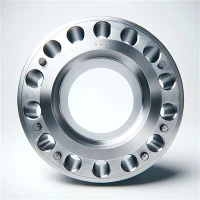
Chrome Moly Flanges
Chrome moly flanges connect pipes, valves, pumps and other equipment, forming a piping system. They are ideal for applications carrying corrosive or high-temperature fluids or gases. Industries that could benefit from chrome moly flanges include: Oil and Gas.

- Product Introduction
Why Choose Us
Diverse Applications
Products are used in various industries, including: Aerospace, petrochemical refining, oil and gas, chemical processing, power generation, pharmaceuticals, food and beverages, rail transit, ships, medical industry, semiconductors and water treatment products in special fields or with special usage environment requirements.
Rich Product Range
We specialize in fasteners and custom parts in nickel-based alloys, titanium, duplex steels, 6% molybdenum and specialty stainless steels. The company's main products: Bolts, nuts, screws, washers, studs, sleeve products, screws, U-bolts and flanges, and provides customers with non-calibrated parts processing services.
Fast Delivery
With millions of dollars of inventory in our product warehouse, we have enough inventory for each product, which allows us to quickly select, pack and ship products to fulfill your order efficiently and timely. Complete production lines also enable rapid production and delivery of customized products.
Strict Management
We strictly supervise each production link and strictly follow the company's production system and industry standards. Our products comply with applicable ASTM, ANSI, ASME, SAE, API, NAS, AN, MS and other standards to provide quality assurance for our products.
Chrome moly flanges connect pipes, valves, pumps and other equipment, forming a piping system. They are ideal for applications carrying corrosive or high-temperature fluids or gases. Industries that could benefit from chrome moly flanges include: Oil and Gas.

Stainless steel flanges are vital components in various industrial processes, serving as connectors or joint pieces between pipes, valves and other equipment. Made from a blend of iron, chromium and nickel, stainless steel flanges boast exceptional strength and resistance to corrosion, making them suitable for use in harsh environments. These versatile flanges come in different shapes and sizes to suit the diverse needs of industries such as oil and gas, chemical processing, pharmaceuticals, water treatment, etc. They also offer excellent sealing capabilities to prevent leakages and ensure a safe working environment.

Because nickel offers wide solubility ranges, its applications in petrochemical, heat exchangers, pressure vessels, valves, oil platforms, and mining are numerous. we specialize in quality custom nickel flanges, fabricated to order using your specs and drawings.

We provide Chrome Moly flanges for all applications including pressure vessels, valves, petrochemical operations, heat exchangers, and refineries. Because Chromoly retains such robust properties, it is ideal for high-temperature service.

We manufacture custom titanium flanges and other alloy flanges to accommodate any application that may arise in the field. We supply commodity (1/2" through 24") B16.5, large diameter, and custom titanium alloy flanges to meet your exact requirements
What Are the Advantages of Chrome Moly Flanges
High Temperature Resistance
Chromium-molybdenum flanges are made of high quality chromium-molybdenum steel as the main material, which not only maintains strength and hardness under extreme high temperatures, but also has excellent anti-oxidation and anti-corrosion ability. This makes the chromium-molybdenum flanges able to operate stably for a long time in the harsh environment of high temperature and high pressure, which is suitable for all kinds of high-temperature and high-pressure industrial piping systems.
Safety Performance
The design of chromium molybdenum flange focuses on the improvement of safety performance, equipped with multiple safety protection devices, such as overheating protection, overload protection, etc., which ensures that the equipment can be safely stopped under abnormal conditions and avoids possible safety accidents. At the same time, the flange connection design of the valve makes the pipeline connection more solid, effectively preventing the leakage problem caused by vibration or temperature change.
Mechanical Properties
The high temperature resistance of chromium molybdenum steel allows it to operate for a long time in high temperature steam without deformation, while high pressure steam can be easily coped with through the valve's precise design and manufacturing process. This special design of the valve ensures that excellent mechanical properties are maintained under high temperature and high pressure operating conditions.
Wide Range Of Application
Chromium-molybdenum flanges are suitable for high temperature and high pressure environments in a variety of industrial fields, providing a reliable solution for the industrial field. It is not only the right hand of engineers and technicians, but also an important part to ensure the safety and stability of industrial production.
Production Process Of Forging Flange
- Select high quality steel billet, carry out unloading, heating, molding and cooling after forging.
- The forging process methods include free forging, die forging and tire die forging, and different forging methods are selected according to the quality size of forgings and the quantity of production.
- The basic processes of free forging are upsetting, drawing, punching, bending and cutting, etc. These processes are used to gradually forging into the shape of forgings.
- Die forging is called model forging, the heated billet will be placed in the forging die fixed in the die forging equipment for forging, the basic processes include feeding, heating, pre-forging, final forging, punching even skin, cutting edge, tempering, shot blasting.
Cutting Flange
- Cut the flange directly on the center plate, leaving the inner and outer diameters of the flange and the thickness of the disk, and then carry out the processing of the bolt holes and the waterline. The flanges produced in this way are called cut flanges.
Application Areas of Chrome Moly Flanges
Petrochemical industry
Chromium-molybdenum steel flanges are widely used in the connection of petrochemical equipments due to its excellent wear resistance and ability to withstand high temperature and high pressure. It can withstand strong corrosive media and high temperature and high pressure working environment to ensure the stable operation and long-term durability of the equipment.
Electric power industry
In the electric power industry, chrome molybdenum steel flanges are used for connecting and fixing key equipment, such as flue gas desulphurization devices, etc. They can maintain excellent performance in high temperature and humid environments, reduce the frequency of equipment shutdowns and maintenance, and ensure long-term stable operation of equipment.
Pharmaceutical and food industries
The equipment and piping in these industries require a high degree of cleanliness and corrosion resistance. Chromoly steel flanges meet the stringent hygiene regulations in these areas, and their chemical stability and durability make them an ideal choice for ensuring hygienic and safe production processes.
Heat Resistance
Chromium-molybdenum steels require a stable metallurgical organization at medium and high temperatures to avoid graphitization phenomena that lead to a sharp increase in material brittleness. In addition, the steel is required to have high high temperature endurance strength limit and creep limit to ensure its performance stability under high temperature conditions.
Hydrogen Resistance
Under high temperature and high pressure conditions, hydrogen invading the steel and the steel carburite and unstable carbide precipitation of carbon chemical reaction to generate methane, resulting in steel rupture phenomenon known as hydrogen corrosion. Key factors affecting the susceptibility to hydrogen corrosion include the chemical composition of the steel, the operating temperature, the partial pressure of hydrogen during exposure and the stress level. The rate of hydrogen corrosion of steel accelerates with increasing pressure and temperature, so special attention needs to be paid to controlling these factors to minimize the risk of hydrogen corrosion.
Temper Embrittlement
Temper embrittlement occurs at temperatures in the range of 370-595°C, with higher rates of embrittlement especially near the upper end of this temperature range. The degree of temper embrittlement is usually indicated by an increase in the tough-brittle transition temperature. In order to reduce the risk of temper embrittlement, measures can be taken such as controlling the Si and Mn content and the content of deleterious elements in the steel, as well as controlling the tough-brittle transition temperature of the steel and the weld metal.
Material
Chromium molybdenum flanges are usually made of chromium molybdenum steel, which has good resistance to high and low temperatures as well as corrosion, and is suitable for seamless steel pipes for high and low temperatures and corrosion in petroleum, chemical, electric power, boiler and other industries.
Specifications
Chromium-molybdenum flanges are available in a variety of specifications, including but not limited to outside diameter, wall thickness, connection size, etc. The selection of specifications should be based on the needs of the actual use scenario. For example, the standards of chrome molybdenum alloy steel pipe include GB5310-1995, GB17396-1998, etc. The specification range is wide, from 14x2 to 42x5.5, which is suitable for different fluid media and pressure requirements.


Connection Method
The connection method of chrome moly flanges should comply with relevant standards, such as GB/T 9113.1-2000 and GB/T 9115.1-2000, to ensure the reliability and safety of the connection. In addition, the structure length and pressure test of the flange should also meet the corresponding national standards, such as GB/T 12221-1989 and GB/T 13927-1992.
Applicable Working Conditions
Chromium-molybdenum flanges are suitable for use in pipelines of various corrosive and non-corrosive fluid media to regulate and cut off the flow of media. Its product features include lightweight structure, flexible operation, reliable sealing, etc. It is widely used in water, steam, oil, air, gas and other media.
Installation Method of Chrome Moly Flanges
Preparation Stage
• Checking materials: Make sure all materials such as chrome moly flanges, bolts, gaskets, etc. are in accordance with the design requirements and free from damages or defects.
• Cleaning work: Clean the sealing surface of the flange and the pipe connection area to ensure that there is no oil, dirt, impurities, etc., so as not to affect the sealing effect.
Flange Butt Joint
• Alignment: Align the sealing surfaces of the two flanges to ensure that the centerline of the flange joints is less than 1.5mm, the sealing surface is not more than 0.8mm, the bolt holes are aligned, and the offset between the holes is not more than 3mm.
• Gap control: Before tightening the bolts, the gap between the sealing surfaces of the flanges should be not more than 2 times of the thickness of the gasket, and it shall not be seated with the help of additional auxiliary tools, nor shall the bolts be tightened by means of strong tightening to adjust the spacing of the flanges or to eliminate the deflection of the flange joints.
Gasket Installation
• Gasket selection: Select gaskets that match the flange size and make sure that the material and performance of the gaskets meet the design requirements.
• Gasket Installation: Place the gasket between the two flanges to ensure that the gasket is coaxial with the flanges and to prevent the gasket from blocking the media flow path. Appropriate methods should be used to position the gasket during installation. Do not use adhesive tape to fix the gasket, or apply grease at will (unless the gasket manufacturer has special requirements).
Bolt Fastening
• Fastening sequence: Fasten the flanges according to the principle of symmetrical fastening, set the fastening sequence number and refer to the relevant drawings.
• Preliminary fastening: Position the gasket with 4 screws at 1, 2, 3 and 4 to ensure that the center of the wrapped gasket is within the edge of the flange. Then hand tighten the locating screws, followed by inserting the other stud screws and tightening them to equalize the load. Ensure that at least 2 threads are exposed at each end of the nut.
• Step-by-step tightening: According to the site equipment and flange conditions, according to the tightening of a circle for a calculation, a reasonable formulation of the number of times (at least 3 times) and each time the tightening load (strength or torque). The load should be tightened from small to large (e.g. 50%, 80%, 100% increment), and should not be loaded too fast or too large to prevent gasket seal failure.
• Final tightening: Finally tighten all screws in clockwise or counterclockwise order at 100% load (force or torque). If a torque wrench is used, the torque value should be recorded for future reference.
Inspection And Record
• Check Sealing: After installation, check the sealing of the flange joints to make sure there is no leakage.
• Record information: Record the key information during the installation process, such as tightening sequence, number of times of tightening, torque value, etc., for future maintenance and repair.
Caution
• During installation, avoid damage to flanges, bolts, gaskets and other materials.
• When fastening the bolts, make sure that the bolts are perpendicular to the flange and pass freely through the bolt holes, and that the nuts are flat against the back of the flange.
• If the installation deviation of the flange joint is out of specification, it should be corrected before the gasket is loaded.
• The installation of valves and other equipment should comply with the relevant standards and design requirements to ensure that the installation direction is correct and the seal is good.
Our Factory
Ningbo Decheng Industrial Equipment Co., Ltd. is a private company specializing in high performance high temperature, corrosion resistance, high strength and other special material fasteners, headquartered in Zhejiang Province, China.
Founded in July 2019, the company is located in Ningbo, Zhejiang Province, China, with a registered capital of 300,000 US dollars. It is a privately owned enterprise, specializing in providing fasteners and custom parts of nickel-based alloy, titanium, biphase steel, 6% molybdenum and special performance stainless steel. We provide small-batch and multi-variety business services. Bolts, nuts, screws, washers, studs, sleeve products, threaded rods and U-bolts and flanges.

FAQ
Hot Tags: chrome moly flanges, China chrome moly flanges manufacturers, suppliers, factory, flanges for forklifts, square flanges, flanges for scooters, flanges for wastewater reuse systems, stainless steel flanges, raised face flanges