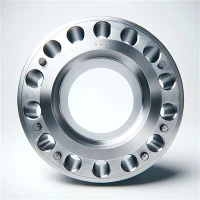
Titanium Flange
A titanium flange is a type of component which is utilize to join pipes that are attached to pipe ends and are constructed of the non-ferrous metal titanium or a titanium alloy. The titanium flange has holes, and bolts firmly fasten the two flanges together.

- Product Introduction
Wholesale Titanium Flange Supplier
Ningbo Decheng Industrial Equipment Co., Ltd. was established in July 2019. It has completed more than 300 cooperation projects with customers at home and abroad. Its outstanding efficiency and performance have been recognized by customers.
Strict Management
We strictly supervise each production link and strictly follow the company's production system and industry standards. Our products comply with applicable ASTM, ANSI, ASME, SAE, API, NAS, AN, MS and other standards to provide quality assurance for our products.
Fast Delivery
With millions of dollars of inventory in our product warehouse, we have enough inventory for each product, which allows us to quickly select, pack and ship products to fulfill your order efficiently and timely. Complete production lines also enable rapid production and delivery of customized products.
Diverse Applications
Products are used in various industries, including: aerospace, petrochemical refining, oil and gas, chemical processing, power generation, pharmaceuticals, food and beverages, rail transit, ships, medical industry, semiconductors and water treatment products in special fields or with special usage environment requirements.
Rich Product Range
We specialize in fasteners and custom parts in nickel-based alloys, titanium, duplex steels, 6% molybdenum and specialty stainless steels. The company's main products: bolts, nuts, screws, washers, studs, sleeve products, screws, U-bolts and flanges, and provides customers with non-calibrated parts processing services.

Chrome moly flanges are specifically designed to withstand high temperatures, making them suitable for applications in elevated temperature environments. These flanges offer exceptional strength and mechanical properties, providing reliable performance in demanding conditions.

Because nickel offers wide solubility ranges, its applications in petrochemical, heat exchangers, pressure vessels, valves, oil platforms, and mining are numerous. Nickel alloys used in flanges exhibit good weldability, allowing for easy and reliable joining during installation or fabrication.

Despite their light weight, titanium flanges offer high strength and excellent load-bearing capabilities. Titanium is highly resistant to corrosion, making Titanium Flanges suitable for use in harsh environments or applications involving chemicals or saltwater.

Stainless steel forged flanges are versatile and widely used in various industries, including oil and gas, chemical processing, food and beverage, and more. These flanges are available in various sizes and pressure ratings to accommodate different piping and equipment requirements.

What is Titanium Flange?
A titanium flange is a type of component which is utilize to join pipes that are attached to pipe ends and are constructed of the non-ferrous metal titanium or a titanium alloy. The titanium flange has holes, and bolts firmly fasten the two flanges together. The gasket is utilize to seal the flange. Pipe fittings with flanges are known as flange pipe fittings (flange or adapter).
Many various industrial applications call for the use of titanium flanges. Providing a safe attachment point between two pieces of metal or other materials is the most typical application for titanium flanges. For this reason, titanium flanges are frequently employ in plumbing applications to join pipes and other components together. Titanium flanges can take a lot of pressure because of their extreme strength without accidentally being harmed or destroyed. They may be move around without any issues because they are also incredibly light in weight.
Types of titanium flanges
Titanium Weld Neck Flange
A titanium weld neck flange is a type of titanium flange designed to transfer stresses to the pipe to reduce high-stress concentrations at the base of the titanium flange. Compared with other types, titanium weld neck flanges are known for their tapered hub and gentle transition from flange thickness to pipe wall thickness. They are deformation-resistant and are normally used for high-pressure piping systems, high or low temperature conditions.
Titanium Slip On Flange
Titanium Slip on flange is a type of titanium flange that slides over the end of steel piping and then welded in place. Because the pipe slips into the titanium flange before welding, it has a low hub. The inside and outside of the titanium flanges are both welded, resulting in sufficient strength and no leak. Slip-on flanges can be easily fitted and welded into different pipes. It is perfect for lower-pressure applications.
Titanium Threaded Flange
Titanium-threaded flanges are employed in exceptional circumstances because they can be fastened to a pipeline without welding. These titanium flanges are used in high-pressure systems with small diameter pipes, and the bigger the titanium flange is, the more challenging it is to form a thread. This distinct flange type is more convenient to install and maintain than titanium flat welding and butt-welding flanges and can be used in pipelines that do not permit welding on-site.
Titanium Blind Flange
A titanium blind flange is a popular type of titanium pipe flanges. It has no bore in the center, and is primarily used to close the ends of piping systems. This titanium flange permits easy access to a line once it has been sealed. It sometimes can be machined to accept a nominal sizes pipe to which a threaded or welded reduction is being made.
Titanium Spectacle Flange
A titanium spectacle blind, or a figure-8 blind, is usually a cut-out of metal crafted to fit between two titanium pipe flanges. This item is typically sandwiched between two gaskets and made up of two metal discs connected with a piece of steel. The unique shape of the spectacle blind is said to be reminiscent of a pair of glasses, giving the blind its distinct name.
Titanium Integral Flange (Titanium Long Weld Neck Flange)
A titanium Integral flange which is also called titanium long weld neck flange (LWN flange), is used for high-pressure situations, titanium integral hub weld neck flanges are used and for very high-pressure cases titanium long welding neck flanges are preferred. In this case, the weld is far from the ring to avoid bending stresses and weld stress being combined.
Titanium Orifice Flange
These flanges are nearly identical to titanium weld neck and slip-on flanges. However, they come with either raised faces or RTJ (Ring Type Joint) facings. They feature additional machining in radial tapped holes for meter connections and orifice plate carriers for fitting the meters. Orifice meters rely on titanium orifice flanges to measure the flow rate of liquids or gases in a pipeline.
Titanium Socket Weld Flange
A titanium socket weld flange has a distinctive inner bore which permits a better stream of fluid accomplished through precise welding and grinding techniques. Developed initially for smaller-sized pipes that necessitate greater pressure, these flanges are known for creating a smoother bore.
Titanium Plate Flange
A titanium plate flange is a flat, circular disk that is welded onto the end of a steel pipe and allows it to be bolted to another pipe. Typically used in fuel and water pipelines, the two titanium flange plates will be bolted together with a gasket in between them. The titanium flange plate will have bolt holes all around the perimeter and will be used to create junctions, tees and joints.
Titanium Non-Standard Flange
Titanium flanges are classified as per their pressure-temperature ratings which are designated as 150#, 300#, 400#, 600#, 900#, 1500# and 2500#. Large diameter titanium flanges that are 24" to 60" are available up to 900# class. Pressure-temperature ratings are the maximum allowable working gage pressures in the bar & the temperatures in degrees Celsius. The higher the rating, the heavier the titanium flange and can withstand higher pressure and temperature. When the temperature goes up, the pressure goes down, and vice versa. Please note that different material has different pressure ratings.
Face Types of Titanium Flange
Raised Face (RF)
Flat Face (FF)
Ring-Type Joint (RTJ)
Ring Type Joint Gaskets
Tongue-and-Groove (T&G)
Male-and-Female (M&F)
Titanium Flange Has High Strength
The density of titanium alloy is about 4.51g/cm3, which is only 60% of that of steel. The density of pure titanium is close to that of ordinary steel. Some high-strength titanium alloys exceed the strength of many alloy structural steels. Therefore, the specific strength (strength/density) of titanium alloy is much higher than that of other metal structural materials.
Titanium Flange Has High Thermal Strength
Titanium alloy can still maintain the required strength at medium temperature, and can work at 450 ~ 500 ℃ for a long time.
Titanium Flange Has Good Corrosion Resistance
Titanium alloy works in humid atmospheres and seawater medium, its corrosion resistance is far better than stainless steel; it has strong resistance to pitting corrosion, acid corrosion and stress corrosion; it has excellent corrosion resistance to alkali, chloride, chlorine organic materials, nitric acid, sulfuric acid, etc.
Titanium Flange Has Good Low-Temperature Performance
The mechanical properties of titanium alloy can be maintained at low and ultra-low temperature. Titanium alloys with good low-temperature properties and very low interstitial elements, such as TA7, can maintain a certain plasticity at - 253 ℃. Therefore, titanium alloy is also an important low-temperature structural material.
Titanium Flange Has High Chemical Activity
When the carbon content is more than 0.2%, the hard tic will be formed in the titanium alloy; when the temperature is higher, the hard tin surface will be formed; when the temperature is above 600 ℃, the titanium absorbs oxygen to form a hardened layer with high hardness; when the hydrogen content increases, the brittle layer will also be formed. The depth of hard and brittle surface layer can reach 0.1-0.15mm and the hardening degree is 20% - 30%.
The Thermal Elasticity of Titanium Flange is Small
The thermal conductivity of titanium is 15.24w / (m.k), which is about 1 / 4 of that of nickel, 1 / 5 of that of iron and 1 / 14 of that of aluminum. The elastic modulus of titanium alloy is about 1 / 2 of that of steel, so its rigidity is poor and it is easy to deform.
Benefits of Titanium Flange
Reduced Maintenance
The durability and corrosion resistance of titanium flanges translate to reduced maintenance requirements. Less frequent maintenance saves time and resources and minimizes downtime in industrial processes. It is advantageous for those industries where interruption in production can lead to significant financial loss.
Weight Savings
Industries that demand efficiency without compromising safety have turned to titanium flanges due to their lightweight nature. If we compare it with other materials, like steel, its weight is significantly lower overall components' weight, making it the perfect choice for various applications.
Improved Safety
In industries dealing with hazardous materials, safety is paramount. Titanium flanges prevent leakage and reduce the risk of accidents, environmental damage, and even loss of life.
Longevity
Titanium flanges have a longer lifespan compared to traditional materials. They are resistant to environmental factors like oxidation and rust. It remains in good condition for the long term.
Technological Advancements
As technology continues to evolve, so do the working methods with titanium. Advances in manufacturing techniques and engineering processes have made titanium flanges more accessible, opening the door to broader adoption across industries.
Environmental Considerations
Titanium is a highly recyclable material, aligning with the growing emphasis on sustainability and environmental responsibility. Choosing titanium flanges reduces the ecological footprint and supports a greener approach to industrial practices.
Titanium Flanges in Various Industries
Aerospace Industry
The aerospace industry heavily relies on titanium flanges for their lightweight nature and exceptional strength. These flanges are extensively used in aircraft engines, landing gears, and airframes. Titanium flanges play a crucial role in ensuring structural integrity while reducing weight, which ultimately contributes to fuel efficiency and increased payload capacity.
Oil and Gas Industry
Titanium flanges find significant applications in the oil and gas industry, particularly in offshore platforms and subsea installations. Due to their excellent resistance to corrosion, even in harsh marine environments, titanium flanges are used in various components like pipelines, valves, and pressure vessels. Their anti-corrosive properties help prevent leaks and reduce maintenance costs.
Chemical Processing Industry
In the chemical processing industry, titanium flanges are widely utilized in equipment for handling corrosive substances such as acids, alkalis, and organic solvents. Their exceptional resistance to corrosion and high temperatures make them suitable for critical applications in reactors, heat exchangers, and storage tanks. Titanium flanges ensure the safety and longevity of equipment in this demanding industry.
Medical and Pharmaceutical Industry
Titanium flanges play a vital role in the medical and pharmaceutical industry due to their biocompatibility and resistance to bodily fluids. They are commonly used in medical implants, such as artificial joints, dental implants, and prosthetics. Titanium flanges also find applications in pharmaceutical processing equipment, where hygiene and corrosion resistance are of utmost importance.
Power Generation Industry
The power generation industry, including nuclear, thermal, and renewable energy sectors, benefits from the use of titanium flanges. These flanges are utilized in various components, including heat exchangers, condensers, and turbines. Titanium's high-temperature tolerance and corrosion resistance make it an ideal choice for ensuring efficient and reliable power generation.
Marine Industry
Titanium flanges are extensively used in the marine industry due to their ability to withstand harsh and corrosive seawater environments. They are commonly found in shipbuilding, offshore structures, and desalination plants. Titanium flanges help enhance the longevity and performance of marine equipment, reducing maintenance and replacement costs.
Automotive Industry
The automotive industry benefits from the use of titanium flanges in various applications, particularly in high-performance vehicles. These flanges are used in exhaust systems, turbochargers, and intercoolers. Titanium's lightweight nature and resistance to high temperatures contribute to improved performance, fuel efficiency, and reduced emissions.
Mining and Ore Processing Industry
In the mining and ore processing industry, titanium flanges are crucial in equipment used for handling abrasive materials and corrosive chemicals. They are commonly used in pipelines, valves, and pumps. Titanium flanges' resistance to abrasion and corrosion ensures reliable operation and minimizes downtime in mining and ore processing operations.
Process of Manufacturing Titanium Flange
Raw Material
Beginning with this process, the system controls the quality of all external supplies as per the raw material test certificate of the material. Titanium flanges are of premium quality that ensures high durability, strength and resistivity to varied non-supporting conditions.
Material Inspection
Incoming quality control (IQC) is the process of monitoring the quality of materials and parts for manufacturing a product before production starts. With incoming inspection, you can control for quality even before leading a first item inspection or a during production inspection.
Material Cutting
On the central plate, the disk with the internal diameter and the internal diameter of the flange with the processing amount is straight cut out, and the bolt hole and the water line are processed. The flange thus produced is called a cut flange, and the extreme diameter of such a flange is limited to the width of the central plate.
Flange Forging
Forged flanges usually have lower carbon content than cast flanges and are less disposed to rust. Forgings have better streamlined shapes, thicker structure and better mechanical properties. The forged flange is that the inner structure is uniform, and there are no harmful defects such as holes and presence in the casting.
Heat Treatment
The flange is in the process of heat treatment, the overall forging cooling speed is the slowest, the standardizing cooling speed is quicker, reducing cooling speed is faster. Flange are mutually connected and continuous in the process. Coating or packaging methods can protect heating molten salts and in vacuum.
Forging Rolling
Roll forging is a forging method that utilizes opposing rolls to shape a metal part. Even though roll forging uses rolls in order to achieve the deformation of the material, it is classified as a metal forging process and not a rolling process. The forging geometry of the rolls used to forge metal parts is only current over a portion of the roll's edge.
Final Inspection
Place one end of a tape measure on the inside of the flange. The diameter is used to control what size pipe a flange can be used with, so you must find this information by using the inside of the flange as different to the outside. Stretch your tape measure across the center of the circular shape of the flange until it touches the other side of the unit.
Rust Prevention
The standard rust prevention treatment for titanium flanges include yellow (Golden) paint Coating, black paint coating or black phosphating treatment, varnish paint coating, varnish antirust oil coating, electro galvanizing coating (Cold), hot dip galvanizing coating etc.
Well Packing
Titanium flanges must be packed with seaworthy packing method then delivery to customers, usually the packing way include wooden box, wooden pallet, iron & steel cage, iron & steel pallet etc. Because of the normal wooden boxes or wooden pallets have to do fumigation treatment, we usually use plywood pallet or plywood case or box to pack titanium flanges without fumigation treatment.
Calculating the Flanges Weight
While calculating the weight, it is necessary to understand that the construction of pipe flanges is directly connected to the material grade and the pressure it can handle. Just providing a few details like outside diameter and inside diameter, the thickness of the base, the number of drill holes, the diameter of the holes, and the chamfer can easily help calculate the flange weight in seconds.
Measuring Flange Thickness
Flange thickness calculation can be achieved through some techniques. In standard flanges, by understanding the design conditions, especially the pressure and temperature of the piping system and the kind of piping material, the thickness can be found. In this situation, no calculations are required to find the flange dims. Once you find out the flange rating (class), it is easy to find the standard flange dimensions from the ASME B16.5 table.


Flange Specifications
Many standard flange specifications are available depending on the variety of industries. Flange specifications indeed vary according to the industries and their applications. Most of the standard manufacturers offer popular flange specifications like ASME/ANSI flanges, DIN flanges, API flanges, and AWWA flanges. ANSI stands out as the best and most popularly used among the various flange specifications because of its ubiquitous mechanical designs amongst ASME engineers.
ANSI Flange and its Dimensions
ANSI (or the American National Standards Institute) is the most standard flange specification and the most preferred flange in various industries. The standardized ANSI flange dimensions are 150, 300, 400, 600, 900, 1500, and 2500, in sizes NPS 1/2 through NPS 24. Furthermore, ANSI B16.47 covers pressure classes ranging from 75 to 900.
Choosing the Right Titanium Flange
Flange Types and Standards
Titanium flanges come in various types, each designed for specific applications. Each type has distinct features that determine its suitability for different situations. For instance, weld neck flanges are suitable for high-pressure systems, while slip-on flanges are convenient for systems that require frequent disassembly. Selecting the appropriate type ensures seamless integration into the existing system. Additionally, titanium flanges adhere to international standards set by organizations like the American Society of Mechanical Engineers (ASME) and the American Society for Testing and Materials (ASTM). These standards ensure uniformity and compatibility across industries. It's essential to verify that the chosen titanium flange meets the required standards to guarantee its performance and reliability.
Consideration for Welding
Welding titanium requires specialized techniques due to the metal's reactive nature at high temperatures. When choosing a titanium flange, it's crucial to consider the welding process that will be employed. Welding methods such as TIG (Tungsten Inert Gas) and electron beam welding are commonly used for titanium due to their precision and ability to prevent contamination.
Corrosion Resistance in Specific Environments
Different industries expose piping systems to varying levels of corrosive environments. When choosing a titanium flange, it's important to assess the specific corrosive factors that the flange will encounter. Titanium's corrosion resistance is exceptional, but its performance may still vary based on factors such as the type of corrosive substance, temperature, and pressure.
Temperature and Pressure Considerations
Titanium's ability to withstand high temperatures and pressures is a major advantage. However, the specific temperature and pressure conditions in your application should be thoroughly evaluated. Certain titanium grades are better suited for high-temperature applications, while others excel in high-pressure environments. Understanding the temperature and pressure limits of the chosen titanium flange is essential to prevent unexpected failures.
Compatibility with Piping Materials
Compatibility between the titanium flange and the piping materials is another crucial consideration. The flange material should be compatible with the materials of the pipes, valves, and other components it will be connected to. Incompatibility can lead to galvanic corrosion, which can compromise the integrity of the entire system.
FRP Flange vs. Titanium Flange
| Category | FRP Flanges | Titanium Flanges |
| Material | Made of composite materials, including fiberglass and resin | Made of titanium, a highly durable and corrosion-resistant material |
| Weight | Lightweight, easy to handle and install | Relatively lightweight, but heavier than FRP |
| Corrosion | Highly resistant to corrosion, rust, and chemical attack | Extremely corrosion-resistant, able to withstand highly aggressive environments |
| Temperature | Limited resistance to high temperatures (up to 250°F) | High resistance to high temperatures, able to withstand up to 800°F |
| Pressure Rating | Limited pressure rating compared to metal flanges | High pressure rating, suitable for high-pressure applications |
| Cost | Generally more affordable than titanium | Generally more expensive than FRP, but less expensive than other high-performance materials |
Our Factory
Ningbo Decheng Industrial Equipment Co., Ltd. is a private company specializing in the production of high-performance, high-temperature, corrosion-resistant, high-strength and other special material fasteners. It was established in July 2019 and is located in Ningbo City, Zhejiang Province, China. We provide fasteners and customized parts of various materials and provide small batch, multi-variety business services.


Frequently Asked Questions
Q: What are the uses of flanges?
Q: What is the most commonly used flange?
Q: What are the two main standards of flanges?
Q: What is the use of flange in sheet metal?
Q: What are flanges in steel?
Q: What are the different types of steel flanges?
Q: What are different types of flanges?
●Slip-on flange.
●Socket weld flange.
●Lap joint flange.
●Threaded flange.
●Blind flange.
Q: Why choose stainless steel flanges?
Q: What type of flange is ASME?
Q: What is the difference between ASME and ANSI flanges?
Q: What are the classes of ASME flanges?
Q: What is the weakest type of flange?
Q: What is the most common facing used with steel flanges?
Q: What type of flanges are standard?
Q: What does B16 mean on a flange?
Q: What are the two main standards of flanges?
Q: What is the allowable gap between flanges?
Q: Which type of flange is used in high pressure?
Q: Are flanges cast or forged?
Q: Which flanges require a full face gasket?
Q: Why do we use raised face in flanges?
Q: What is the difference between ANSI and DIN flanges?
Hot Tags: titanium flange, China titanium flange manufacturers, suppliers, factory, flanges for air purification plants, flanges for hoppers, flanges for agricultural equipment, flanges for deep sea exploration, flanges for condensers, flanges for electric vehicles