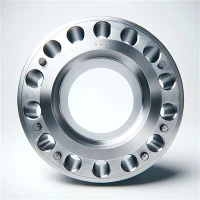
Nickel Alloy Flanges
Nickel alloy flanges are a common piping connector used in industry, the main material is nickel alloy, which has many unique properties and applications. Nickel alloy flanges are made of nickel or nickel alloy materials, which have good corrosion and heat resistance as well as excellent mechanical properties. For example, Nickel 201 pure nickel flanges are a kind of iron-free nickel alloy, which is especially suitable for acid and alkali resistance, high temperature and high pressure resistance.

- Product Introduction
Why Choose Us
Diverse Applications
Products are used in various industries, including: Aerospace, petrochemical refining, oil and gas, chemical processing, power generation, pharmaceuticals, food and beverages, rail transit, ships, medical industry, semiconductors and water treatment products in special fields or with special usage environment requirements.
Rich Product Range
We specialize in fasteners and custom parts in nickel-based alloys, titanium, duplex steels, 6% molybdenum and specialty stainless steels. The company's main products: Bolts, nuts, screws, washers, studs, sleeve products, screws, U-bolts and flanges, and provides customers with non-calibrated parts processing services.
Fast Delivery
With millions of dollars of inventory in our product warehouse, we have enough inventory for each product, which allows us to quickly select, pack and ship products to fulfill your order efficiently and timely. Complete production lines also enable rapid production and delivery of customized products.
Strict Management
We strictly supervise each production link and strictly follow the company's production system and industry standards. Our products comply with applicable ASTM, ANSI, ASME, SAE, API, NAS, AN, MS and other standards to provide quality assurance for our products.
Nickel alloy flanges are a common piping connector used in industry, the main material is nickel alloy, which has many unique properties and applications. Nickel alloy flanges are made of nickel or nickel alloy materials, which have good corrosion and heat resistance as well as excellent mechanical properties. For example, Nickel 201 pure nickel flanges are a kind of iron-free nickel alloy, which is especially suitable for acid and alkali resistance, high temperature and high pressure resistance.

Stainless steel flanges are vital components in various industrial processes, serving as connectors or joint pieces between pipes, valves and other equipment. Made from a blend of iron, chromium and nickel, stainless steel flanges boast exceptional strength and resistance to corrosion, making them suitable for use in harsh environments. These versatile flanges come in different shapes and sizes to suit the diverse needs of industries such as oil and gas, chemical processing, pharmaceuticals, water treatment, etc. They also offer excellent sealing capabilities to prevent leakages and ensure a safe working environment.

Chrome moly flanges connect pipes, valves, pumps and other equipment, forming a piping system. They are ideal for applications carrying corrosive or high-temperature fluids or gases. Industries that could benefit from chrome moly flanges include: Oil and Gas.

Because nickel offers wide solubility ranges, its applications in petrochemical, heat exchangers, pressure vessels, valves, oil platforms, and mining are numerous. we specialize in quality custom nickel flanges, fabricated to order using your specs and drawings.

We manufacture custom titanium flanges and other alloy flanges to accommodate any application that may arise in the field. We supply commodity (1/2" through 24") B16.5, large diameter, and custom titanium alloy flanges to meet your exact requirements.
Corrosion Resistance
Nickel alloy flanges are suitable for a variety of chemical media, such as acids, alkalis, salts and so on, and have good corrosion resistance. This makes nickel alloy flanges widely used in chemical, petroleum, nuclear industry and other fields, which can resist the erosion of many kinds of corrosive media and ensure the long-term stable operation of equipment.
High-temperature And High-pressure Resistance
Nickel alloy flanges can work stably for a long time under high-temperature and high-pressure environments, and will not be degraded or damaged due to changes in temperature and pressure. This characteristic makes nickel alloy flanges especially suitable for industrial applications that need to withstand extreme working conditions.
Low Magnetism
The low magnetism of nickel alloy flanges will not interfere with electronic equipment, which is especially important for electronic equipment and instruments that require precise control to ensure the normal operation of the equipment and the accuracy of the data.
Good Heat Resistance And Thermal Stability
Nickel alloy flanges can still maintain good performance under high temperature conditions, with excellent heat resistance and thermal stability, suitable for high temperature working environment.
Wide Range Of Applications
Due to the above advantages, nickel alloy flanges are widely used in many fields such as chemical industry, petroleum, nuclear industry, aerospace, shipbuilding and so on. In these fields, nickel alloy flanges are used to connect and seal pipelines and equipments to ensure the safe operation of the system.
Application Areas of Nickel Alloy Flanges
Aerospace
Nickel-based alloys play a key role in the aerospace industry due to their excellent high-temperature performance, corrosion resistance and mechanical properties, and are used to manufacture high-performance, high-reliability piping connection components.
Petrochemical
Nickel-based alloy flanges are used in a wide range of petrochemical applications, including refineries, chemical equipment and piping systems. Their corrosion resistance and high temperature strength make them ideal for use in these applications.
Energy
In the energy sector, nickel-based alloy flanges are used in nuclear power generation, comprehensive utilization of coal, and tidal power generation. These applications require materials with excellent corrosion resistance and high temperature strength.
Environmental Protection
In the field of environmental protection, nickel-based alloy flanges are used in flue gas desulphurization devices for thermal power generation, wastewater treatment, etc. These applications demonstrate their adaptability to extreme environments.
Marine Platform
In the marine environment, nickel-based alloy flanges are used in seawater treatment equipment and pipeline connections, adapted to desalination, propagation, heat exchange and other processes.
Nuclear Industry
In the nuclear industry, nickel-based alloy flanges are used as an important part of high temperature and high pressure working environment, and their performance is vital to guarantee the safe and stable operation of nuclear facilities.
Food Industry
In the food industry, such as salt making and soy sauce brewing, nickel-based alloy flanges are also applied, showing their universal applicability in different industries.
Nickel Alloy Flange Connection Method
Threaded Connection
• Threaded connection is one of the most common types of connection, where the flange is connected to the corresponding threaded parts by means of internal or external threads on the flange.
• This type of connection is simple and convenient, especially suitable for small diameter and low pressure applications.
Butt-welding Connection (BW Butt-welding)
• Butt-welded connections are commonly used in high-pressure environments. Two flanges are welded together by means of a welding technique to form a solid seal.
• Butt-welded connections are suitable for high pressures, high temperatures and harsh environments, ensuring a strong and tight connection.
Socket Welding (SW Socket Welding)
• Socket weld connections are made by inserting one flange into the socket of another flange and then welding the connection.
• This type of connection also has high strength and sealing, and is suitable for occasions that require high connection strength.
Flange Connection (RJ/RF Flange)
• Flange connection is through the bolt holes on the flange, with bolts, nuts and gaskets to connect the two flanges closely together.
• Flange connection has the advantages of easy disassembly, reliable connection, etc. It is widely used in the connection of various pipelines and equipment.
Welding Connection
• In addition to butt welding connection, welding connection also includes other welding methods, such as TIG argon arc welding.
• These welding methods can realize the strong connection between flange and pipe or equipment, and have good sealing performance.
Wire Drawing Connection
• Wire drawing connection is a way to connect two flanges together by drawing material.
• This type of connection can realize removable connection, which is easy for maintenance and replacement.
Expansion Connection
• Expansion connection utilizes expansion bolts to connect two flanges together, and the gasket between the two flanges is squeezed by the tension of the bolts to form a seal.
• Expanding connections are suitable for larger diameters and high pressure applications, ensuring a tight and airtight connection.
Locking Connections
• Locking connection utilizes nuts and bolts to connect the two flanges together, and the tightening and sealing between the flanges is achieved by tensioning the bolts and locking the nuts.
• This type of connection is simple, reliable and applicable to a wide range of working conditions.
Elastic Connection
• Elastic connection is a way to connect two flanges together by using elastic material (such as rubber).
• Elastic connection can absorb vibration and displacement, increase the stability and safety of the system.
Clean The Flange Surface
Before assembling the flange, the flange surface, especially the sealing surface, must be cleaned up to ensure the sealing performance.
Spot Welding Fixing
When assembling flat welding flanges, the pipe end should be inserted into 2/3 of the thickness of the flange's inner diameter, and then spot weld the flange with the pipe to fix it. For horizontal pipeline, spot welding should be done from the top first, and then check and correct the position of the flange from different directions with 90° angle ruler, so that the sealing surface is perpendicular to the centerline of the pipe, and then spot weld the second point below without error. Then, check and correct the position of the flange from the left and right directions with a 90° angle ruler, and then spot weld the third and fourth points after passing the test to complete the spot welding of the flange.


Align The Bolt Holes
For the assembly of pairs of flanges, the bolt holes of the flanges to be installed should be aligned with the corresponding bolt holes of the flanges that have been fixed and parallel to the flanges that have been fixed, and the deviation should not be more than 1.5 ‰ of the flange's outer diameter and not more than 2mm.
Check The Flange Connection Size Of The Equipment Or Valves
When choosing the equipment or valves with flanges, attention should be paid to whether the flange of the original equipment or valves and the flange connection size used in the pipe are in line with each other.
Precautions for the Use of Nickel Alloy Flanges
Moderate Temperature Control
When nickel-based alloy equipment is in operation, it must be ensured that the temperature does not exceed its temperature-resistant range, so as to prevent the physical and chemical properties of the material from being damaged, which in turn affects the life of the equipment.
Avoid Excessive Stress
In the use of nickel-based alloys, unnecessary stress, such as strong vibration, should be avoided as much as possible in order to prevent material fatigue, cracking and other damages.
Anti-corrosion
Although nickel-based alloy itself has good corrosion resistance, but still need to avoid contact with oxidizers, strong acids, strong alkalis and other corrosive chemicals in the process of use.
Selection Of Standard Parts
In the manufacturing process of the equipment, should try to use standard parts, avoid the use of low-quality or non-compliance with the specifications of the parts to ensure that the overall performance and life of the equipment.
Our Factory
Ningbo Decheng Industrial Equipment Co., Ltd. is a private company specializing in high performance high temperature, corrosion resistance, high strength and other special material fasteners, headquartered in Zhejiang Province, China.
Founded in July 2019, the company is located in Ningbo, Zhejiang Province, China, with a registered capital of 300,000 US dollars. It is a privately owned enterprise, specializing in providing fasteners and custom parts of nickel-based alloy, titanium, biphase steel, 6% molybdenum and special performance stainless steel. We provide small-batch and multi-variety business services. Bolts, nuts, screws, washers, studs, sleeve products, threaded rods and U-bolts and flanges.

FAQ
Hot Tags: nickel alloy flanges, China nickel alloy flanges manufacturers, suppliers, factory, flange inspection, flanges for deep sea exploration, flanges for oil rigs, ring joint flanges, blind flanges, flanges for heat exchangers