




What is the fatigue life of Type A Plain Washers?
 Jul 25, 2025|
 Hey there! As a supplier of Type A Plain Washers, I often get asked about the fatigue life of these little but crucial components. So, let's dive right in and explore what the fatigue life of Type A Plain Washers really means.
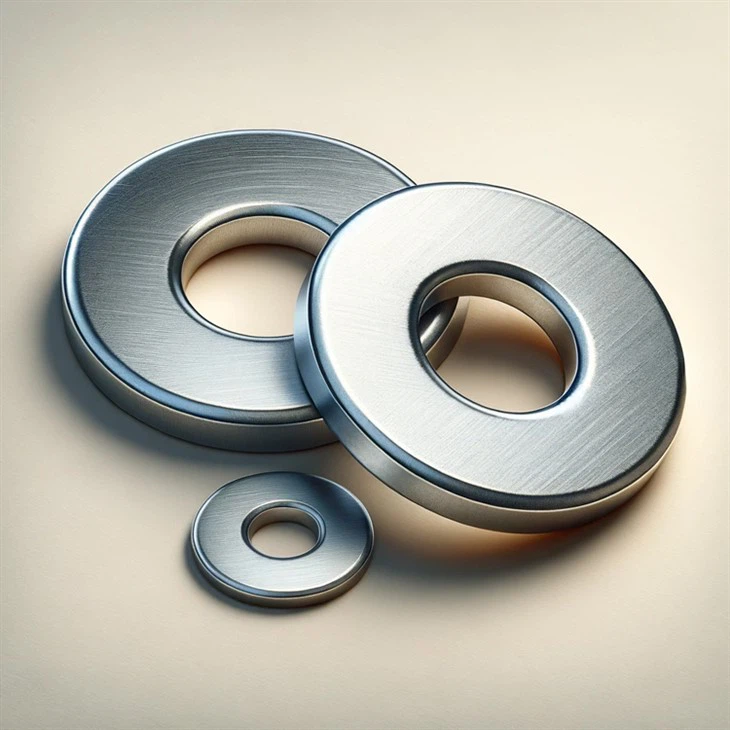
First off, what are Type A Plain Washers? Well, they're simple flat discs with a hole in the middle. You can check out more details about them on our website Type A Plain Washers. These washers are used in a wide range of applications, from automotive to construction, to spread the load of a threaded fastener and prevent damage to the surface it's being tightened against.
Now, when we talk about fatigue life, we're referring to how long a washer can withstand repeated loading and unloading cycles before it fails. Fatigue failure is different from a simple overload failure. An overload failure happens when you apply too much force all at once, and the washer just breaks. Fatigue failure, on the other hand, occurs when the washer is subjected to many cycles of stress that are below its ultimate strength, but over time, these stresses cause cracks to form and grow, eventually leading to failure.
There are several factors that can affect the fatigue life of Type A Plain Washers. One of the most important ones is the material they're made from. We usually use high - quality steel for our washers because it has good strength and ductility. Steel can handle a fair amount of stress cycles before showing signs of fatigue. However, the exact type of steel, its heat treatment, and its chemical composition can all make a big difference. For example, a washer made from a high - carbon steel might have a different fatigue life compared to one made from a low - carbon steel.
The surface finish of the washer also plays a role. A smooth surface finish can reduce stress concentrations. When the surface is rough, there are tiny peaks and valleys that can act as stress raisers. These stress raisers can initiate cracks more easily, which will then propagate under repeated loading, shortening the fatigue life of the washer.
The magnitude and frequency of the applied load are also key factors. If you're using the Type A Plain Washers in an application where the load is constantly changing, like in a vibrating machine, the washer will experience more stress cycles. And if the load is large, even if it's not constant, it can still have a significant impact on the fatigue life. For instance, in a heavy - duty construction equipment, the washers may be subjected to large intermittent loads during operation.
Another factor is the fit of the washer. If the washer doesn't fit properly on the fastener or the surface it's resting on, it can cause uneven loading. This uneven loading can create areas of high stress, which again, can lead to premature fatigue failure.
Now, let's compare Type A Plain Washers with Regular Helical Spring - Lock Washers. Spring - lock washers are designed to provide a locking action and resist loosening due to vibration. They work by applying a spring force between the nut and the surface. In terms of fatigue life, spring - lock washers have a different set of considerations. Their design, with the helical shape, means they can handle a certain amount of deformation without failing. But they also have more complex stress distributions compared to plain washers.
In some applications, the combination of a Type A Plain Washer and a Regular Helical Spring - Lock Washer can be used. The plain washer spreads the load, and the spring - lock washer provides the locking function. However, when using them together, we need to make sure that the overall system doesn't create additional stress concentrations that could reduce the fatigue life of either washer.
To determine the fatigue life of our Type A Plain Washers, we conduct a series of tests. We use specialized testing equipment that can simulate different loading conditions. We apply cyclic loads to the washers and monitor them for signs of cracking or failure. By collecting data from these tests, we can establish a relationship between the applied load, the number of cycles, and the probability of failure. This data is then used to estimate the fatigue life of the washers under different real - world conditions.
It's important to note that the fatigue life we estimate is just that - an estimate. In real - world applications, there are always variables that we can't fully account for. For example, the environment can have an impact. If the washers are used in a corrosive environment, like in a marine or chemical plant, the corrosion can weaken the material and reduce the fatigue life.
So, how can you ensure that you're getting the most out of the fatigue life of our Type A Plain Washers? First, make sure you're using the right size and material for your application. If you're not sure, you can always reach out to us, and we'll help you select the best option. Second, follow the proper installation procedures. Make sure the washers are installed correctly on the fasteners and that they're properly seated on the surface.
If you're in the market for Type A Plain Washers or have any questions about their fatigue life or how they can fit into your application, don't hesitate to contact us. We're here to provide you with the best products and the most accurate information. Whether you're a small - scale DIY enthusiast or a large - scale industrial manufacturer, we've got the washers you need.
Let's work together to make sure your projects are a success with our high - quality Type A Plain Washers. We look forward to hearing from you and discussing your specific requirements.
References:

- "Mechanical Engineering Design" by Joseph E. Shigley and Charles R. Mischke
- "Handbook of Fastening Technology"