




What is a conical washer used for?
 Jan 22, 2026|
 As a supplier of washers, I've witnessed firsthand the diverse applications and importance of different types of washers in various industries. Among them, conical washers, also known as tapered washers, play a crucial role in specific engineering and mechanical scenarios. In this blog, I'll delve into what conical washers are used for, highlighting their unique characteristics and practical applications.
Understanding Conical Washers
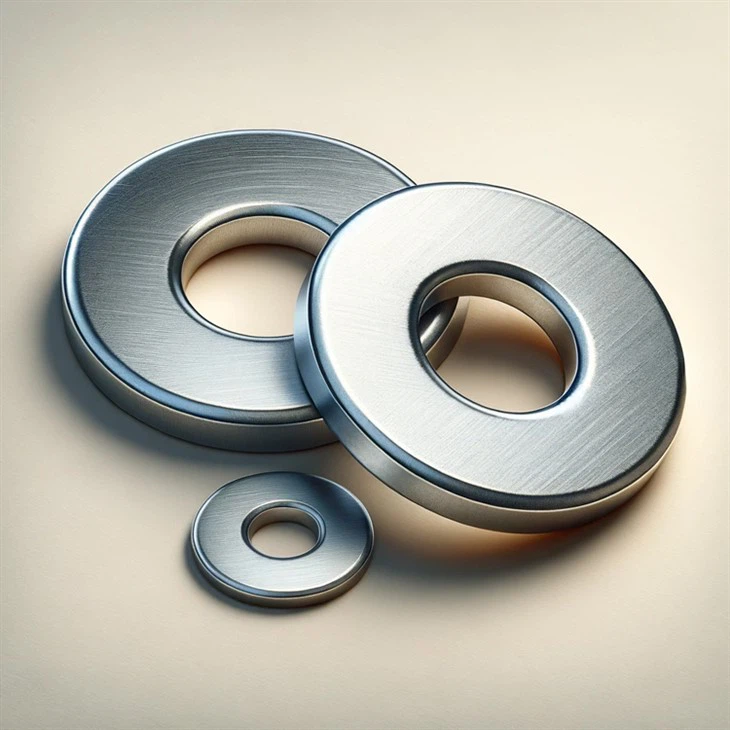
Conical washers are a special type of washer with a tapered shape. Unlike flat washers, which have a uniform thickness, conical washers are thicker at the outer edge and thinner at the center, creating a cone - like appearance. This distinctive shape gives conical washers properties that make them suitable for certain applications where standard washers may not work as effectively.
Applications in Fastening and Assembly
One of the primary uses of conical washers is in fastening and assembly processes. They are often used in conjunction with bolts and nuts to ensure a secure and stable connection. When a conical washer is installed under a nut or bolt head, the tapered surface allows it to conform to the mating surface more effectively.
In applications where the mating surface is not perfectly flat, such as angled or uneven surfaces, a conical washer can compensate for the irregularity. For example, in some heavy - duty machinery, the frames may have slight manufacturing tolerances or become slightly deformed over time. Using conical washers can help distribute the load evenly across the connection, preventing stress concentration that could lead to loosening or failure of the fastener.

Load Distribution and Stress Reduction
The ability of conical washers to distribute loads is another significant advantage. In a typical bolt - nut connection, the load applied by tightening the fastener can create stress in the material. If the load is not distributed evenly, it can cause local deformation, cracking, or even failure of the components.
Conical washers spread the load over a larger area compared to flat washers. The tapered shape allows the washer to gradually transfer the force from the bolt or nut head to the mating surface. This reduces the pressure per unit area, minimizing the risk of damage to the material. For instance, in automotive engines, conical washers are used to secure various components. By evenly distributing the clamping force, they help prevent leaks and ensure the long - term reliability of the engine.
Spring - like Properties
Conical washers also exhibit spring - like properties. When compressed between the fastener and the mating surface, they act like small springs. This elasticity provides a degree of flexibility that can compensate for thermal expansion, vibration, and other dynamic forces.
In environments where there are temperature fluctuations, materials expand and contract. The spring action of conical washers allows the fastener to maintain a constant clamping force even as the components change in size. In electrical equipment, for example, where the heat generated during operation can cause the metal parts to expand, conical washers help keep the connections tight, preventing electrical failures due to loose connections.
Self - Locking and Anti - Vibration
The spring - like behavior of conical washers gives them self - locking and anti - vibration properties. In applications where there is significant vibration, such as in rotating machinery, vehicles, or construction equipment, fasteners can gradually loosen over time. A conical washer can counteract this tendency.
The constant pressure exerted by the compressed conical washer acts as a locking mechanism. It helps keep the nut or bolt in place, reducing the risk of loosening due to vibration. This is especially important in safety - critical applications, where loose fasteners can lead to catastrophic failures. For example, in the aerospace industry, conical washers are used in the assembly of aircraft components to ensure the integrity of the structure under high - vibration and dynamic conditions.
Applications in Specific Industries
Construction
In the construction industry, conical washers are used in a variety of applications. They are commonly employed in steel structures to connect beams, columns, and other structural elements. The ability to distribute loads evenly makes them ideal for ensuring the stability and safety of buildings. Additionally, in outdoor construction projects where exposure to the elements is common, the anti - vibration and self - locking properties help maintain the integrity of the connections over time.
Manufacturing
Manufacturing processes often involve the assembly of complex machinery. Conical washers are used to secure parts together in precision equipment, such as machine tools and robotics. Their ability to compensate for surface irregularities and maintain a constant clamping force is crucial for the accurate operation of these machines. For example, in a high - speed milling machine, conical washers can prevent the loosening of cutting tools, ensuring high - quality machining results.
Electrical and electronics
As mentioned earlier, conical washers are important in electrical and electronic applications. They are used to secure electrical connectors, terminals, and circuit boards. By maintaining a tight connection, they ensure reliable electrical conductivity, reducing the risk of electrical arcing and equipment malfunction. In the production of consumer electronics, such as smartphones and laptops, conical washers are used to secure internal components, providing stability and durability.
Comparison with Other Types of Washers
It's worth comparing conical washers with other common types of washers, such as Type A Plain Washers and Regular Helical Spring - Lock Washers.
Type A plain washers are simple flat washers with a uniform thickness. They are mainly used for general load - spreading purposes and to protect the surface under the fastener. However, they lack the ability to conform to uneven surfaces or provide the spring - like properties of conical washers.
Regular helical spring - lock washers are designed to prevent loosening by exerting a spring force on the nut or bolt. While they are effective in anti - vibration applications, their design is more focused on the locking aspect, and they may not distribute loads as evenly as conical washers over uneven surfaces.
Conclusion
In conclusion, conical washers are a highly specialized and valuable component in many industries. Their unique tapered shape gives them properties such as load distribution, stress reduction, spring - like behavior, self - locking, and anti - vibration capabilities. These properties make them indispensable in applications where standard washers may not be sufficient.
Whether you're involved in construction, manufacturing, or the electrical and electronics industry, understanding the uses of conical washers can help you make informed decisions when it comes to selecting the right fasteners for your projects. If you're in need of high - quality conical washers or other types of washers, I'd encourage you to reach out for procurement discussions. Our team of experts is ready to assist you in finding the most suitable solutions for your specific requirements.
References
- "Handbook of Fasteners and Joining" by Carl H. Bolz and Guy L. Tuplin
- "Mechanical Engineer's Handbook" by Myer Kutz