




How do washers affect noise levels?
 May 15, 2025|
 Washers are often overlooked components in various mechanical and industrial applications, yet they play a crucial role in many aspects, including the noise levels generated by machinery and equipment. As a washer supplier, I've witnessed firsthand how different types of washers can significantly impact noise. In this blog, we'll delve into the science behind how washers affect noise levels and explore the specific contributions of various washer types.
The Basics of Noise Generation in Mechanical Systems
Before we discuss the role of washers, it's essential to understand how noise is generated in mechanical systems. Noise in machinery typically results from vibrations and frictional forces. When two surfaces come into contact and move relative to each other, friction can cause vibrations. These vibrations then propagate through the material and are radiated into the surrounding environment as sound waves.
For example, in a bolted joint, the tightening of the bolt can create pressure between the bolt head, the washer, and the connected parts. If the contact surfaces are not smooth or if there is uneven pressure distribution, it can lead to micro - movements and vibrations. These vibrations can generate audible noise, especially in high - speed or high - load applications.
How Washers Can Mitigate Noise
Washers can act as a buffer between different components in a mechanical system, reducing noise in several ways:
1. Vibration Damping
One of the primary functions of washers is to dampen vibrations. Some washers are made from materials with high damping properties, such as rubber or certain types of polymers. These materials can absorb the energy from vibrations, converting it into heat and reducing the amplitude of the vibrations. As a result, the noise generated by the vibrations is also reduced.

For instance, in automotive engines, rubber washers are often used in various components to reduce the noise and vibration levels. The rubber material can absorb the shock and vibrations caused by the engine's operation, preventing them from being transmitted to other parts of the vehicle and reducing the overall noise inside the cabin.
2. Improving Surface Contact
Washers can also improve the surface contact between the bolt head or nut and the connected parts. A flat and smooth washer can distribute the load evenly over a larger area, reducing the stress concentration at the contact points. This helps to minimize micro - movements and vibrations that can generate noise.
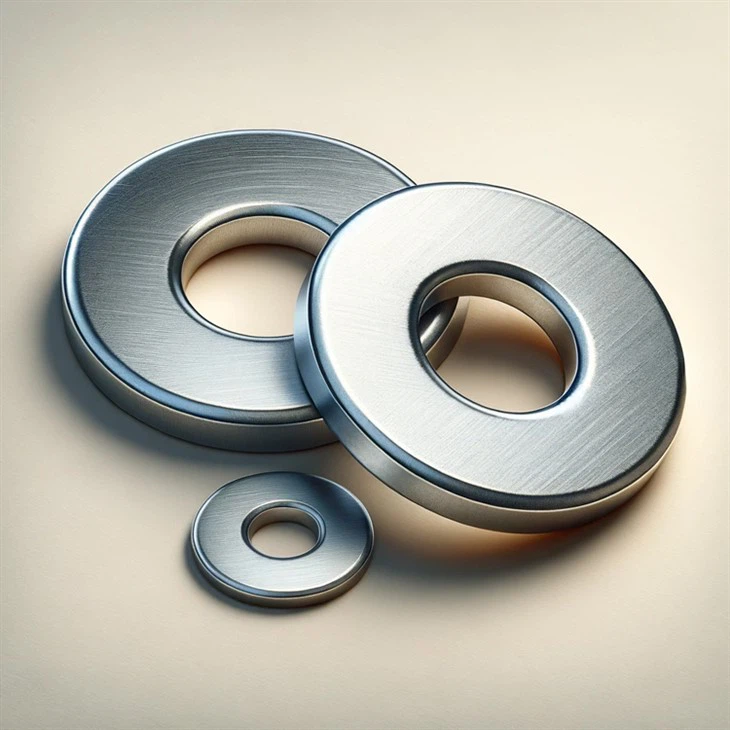
Type A Plain Washers are a good example of washers that can improve surface contact. They have a simple, flat design that provides a large bearing surface. By using Type A Plain Washers, the pressure is more evenly distributed, reducing the likelihood of vibrations and noise.
3. Preventing Loosening
In some cases, noise can be caused by the loosening of bolts or nuts over time. As the fasteners loosen, they can move relative to the connected parts, creating vibrations and noise. Lock washers are designed to prevent this loosening by providing a spring - like force that keeps the fastener tight.
Regular Helical Spring - Lock Washers are a popular type of lock washer. The helical shape of these washers creates a spring force that resists the rotation of the nut or bolt. By using Regular Helical Spring - Lock Washers, the fasteners remain secure, reducing the risk of loosening and the associated noise.
Different Types of Washers and Their Noise - Reducing Properties
Let's take a closer look at some common types of washers and how they affect noise levels:
Flat Washers
Flat washers, such as Type A Plain Washers, are the most basic type of washers. They are typically made of metal, such as steel or stainless steel. As mentioned earlier, their main function is to distribute the load evenly over a larger area, improving the surface contact between the fastener and the connected parts. This helps to reduce the stress concentration and minimize vibrations, thereby reducing noise.
In addition, flat washers can also act as a spacer, ensuring that there is a proper gap between the components. This gap can prevent direct contact between the parts, which can reduce the friction and noise generated by the relative movement of the surfaces.
Lock Washers
Lock washers are designed to prevent the loosening of bolts and nuts. There are several types of lock washers, including helical spring - lock washers, split - ring lock washers, and toothed lock washers.
Helical spring - lock washers, like the Regular Helical Spring - Lock Washers, work by providing a spring force that keeps the nut or bolt tight. This prevents the fastener from loosening due to vibrations or dynamic loads. By maintaining a tight connection, the lock washers reduce the movement between the components, which in turn reduces the noise generated by the loosening of the fasteners.
Split - ring lock washers have a split design that creates a spring - like action when the nut is tightened. This spring action helps to keep the nut in place and prevent it from rotating. Toothed lock washers, on the other hand, have teeth on their surface that bite into the mating surfaces, providing additional resistance to rotation.
Rubber or Polymer Washers
Rubber or polymer washers are known for their excellent vibration - damping properties. They can absorb the energy from vibrations and reduce the amplitude of the vibrations, thereby reducing the noise generated by the vibrations.
These washers are often used in applications where noise reduction is a critical requirement, such as in household appliances, electronics, and automotive components. For example, in a washing machine, rubber washers can be used to dampen the vibrations generated by the motor and the rotating drum, reducing the noise level during operation.
Case Studies: Real - World Examples of Washers Reducing Noise
Let's look at some real - world examples of how washers have been used to reduce noise:
Automotive Industry
In the automotive industry, washers are used in various components to reduce noise and vibration. For example, in the engine mounts, rubber washers are used to dampen the vibrations generated by the engine. These washers absorb the shock and vibrations, preventing them from being transmitted to the chassis of the vehicle and reducing the noise inside the cabin.
In addition, lock washers are used in the suspension system to prevent the loosening of bolts and nuts. By maintaining a tight connection, the lock washers reduce the movement between the components, which helps to reduce the noise generated by the suspension system.
Industrial Machinery
In industrial machinery, washers are also used to reduce noise. For example, in a large - scale manufacturing plant, flat washers are used in the bolted joints of heavy machinery to distribute the load evenly and reduce the stress concentration. This helps to minimize the vibrations and noise generated by the machinery during operation.
Lock washers are also used in industrial machinery to prevent the loosening of fasteners. By ensuring that the fasteners remain tight, the lock washers reduce the movement between the components and the associated noise.
Conclusion
As a washer supplier, I understand the importance of washers in reducing noise levels in mechanical systems. Washers can play a significant role in vibration damping, improving surface contact, and preventing loosening, all of which contribute to reducing noise.
Whether you are in the automotive industry, industrial machinery manufacturing, or any other field that requires noise reduction, choosing the right type of washer is crucial. Type A Plain Washers can improve surface contact and load distribution, while Regular Helical Spring - Lock Washers can prevent fastener loosening. Rubber or polymer washers are excellent for vibration damping.
If you are interested in learning more about our washers and how they can help you reduce noise levels in your applications, please feel free to contact us for procurement and further discussion. We are committed to providing high - quality washers that meet your specific needs.
References
- "Mechanical Vibrations" by Singiresu S. Rao
- "Fasteners and Fixings Handbook" by James A. Coffin
- "Noise and Vibration Control Engineering: Principles and Applications" by Cyril M. Harris