




How do Type A Plain Washers distribute load?
 Jul 16, 2025|
 Hey there! As a supplier of Type A Plain Washers, I often get asked about how these little guys distribute load. So, I thought I'd take a deep dive into this topic and share some insights with you all.
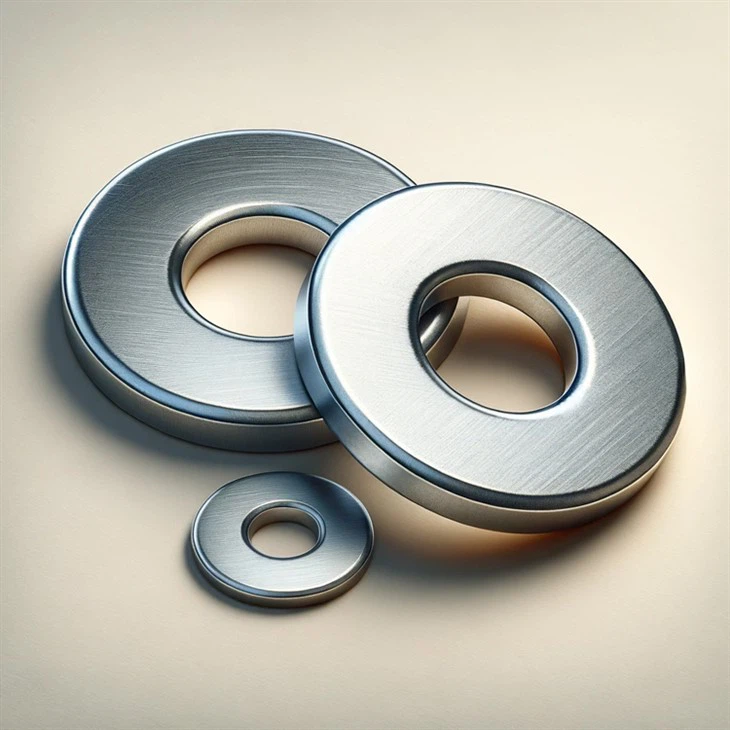

First off, let's talk a bit about what Type A Plain Washers are. You can check out more details about them Type A Plain Washers. These washers are basically flat, circular discs with a hole in the middle. They're super common and used in a whole bunch of applications, from construction to machinery.
Now, let's get into the nitty - gritty of load distribution. When you're working with a bolt and nut assembly, the load that the bolt is supposed to hold is transferred through the bolt head or nut to the surface it's tightened against. Without a washer, this load can be concentrated in a very small area. That's where Type A Plain Washers come in.
The main way these washers distribute load is by increasing the surface area over which the load is applied. Imagine you're standing on a thin piece of ice. If you stand on one foot, the pressure you exert on the ice is concentrated on a small area, and there's a higher chance of the ice breaking. But if you spread out your weight by lying flat on the ice, the pressure is distributed over a larger area, and the ice is less likely to break. It's the same principle with Type A Plain Washers.
When the washer is placed between the bolt head or nut and the surface, it spreads the load from the bolt over a wider area of the surface. This reduces the pressure per unit area on the surface. For example, in a metal - to - metal connection, without a washer, the sharp edges of the bolt head or nut can dig into the metal surface, causing damage like indentation or deformation. But with a Type A Plain Washer, the load is spread out, and the risk of such damage is significantly reduced.
Another aspect of load distribution is related to the material of the washer. Type A Plain Washers are usually made of materials like steel, stainless steel, or brass. These materials have certain mechanical properties that allow them to withstand and transfer the load effectively. Steel washers, for instance, are strong and can handle high loads. They're able to absorb and distribute the force from the bolt evenly across their surface.
In some applications, the surface that the bolt is being tightened against might not be perfectly flat. Maybe it has some minor irregularities or roughness. A Type A Plain Washer can act as a buffer and help to compensate for these imperfections. It can conform to the shape of the surface to some extent, ensuring that the load is still distributed as evenly as possible.
Now, let's compare Type A Plain Washers with other types of washers. For example, Regular Helical Spring - Lock Washers are designed mainly to prevent loosening due to vibration. While they also play a role in load distribution, their primary function is different. Regular Helical Spring - Lock Washers have a spring - like design that provides a constant tension between the bolt and the surface. In contrast, Type A Plain Washers are focused more on the straightforward task of spreading the load.
The size of the Type A Plain Washer also matters a lot when it comes to load distribution. A larger - diameter washer will distribute the load over a larger area compared to a smaller - diameter one. However, you need to make sure that the size of the washer is appropriate for the application. Using a washer that's too large might not fit properly in the assembly, and using one that's too small won't distribute the load effectively.
In terms of thickness, a thicker washer is generally better at handling higher loads. A thicker washer has more material to absorb and transfer the force, which means it can distribute the load more evenly. But again, you have to balance this with the requirements of the specific application. In some cases, a thinner washer might be sufficient, and using a thicker one could add unnecessary weight and cost.
When it comes to installation, it's crucial to place the Type A Plain Washer correctly. It should be centered properly under the bolt head or nut. If it's off - center, the load won't be distributed evenly, and there could be areas of high stress on the surface. Also, make sure that the washer is clean and free from any debris or damage before installation. A damaged washer might not be able to distribute the load as intended.
In the world of engineering and manufacturing, understanding how Type A Plain Washers distribute load is really important. It can help in designing more reliable and durable assemblies. For example, in automotive engines, where there are a lot of bolts and nuts holding different components together, proper load distribution with Type A Plain Washers ensures that the engine parts stay in place and function correctly over time.
If you're in the market for Type A Plain Washers, whether it's for a small DIY project or a large - scale industrial application, I'm here to help. I've got a wide range of Type A Plain Washers in different sizes, materials, and thicknesses to meet your specific needs. We can have a chat about your requirements, and I can provide you with the best - suited washers for your job.
In conclusion, Type A Plain Washers are simple yet incredibly important components when it comes to load distribution. They play a vital role in protecting surfaces, reducing stress concentrations, and ensuring the longevity of bolted connections. So, if you're working on any project that involves bolts and nuts, don't overlook the power of these little washers.
If you're interested in learning more or making a purchase, feel free to reach out. I'm always happy to discuss your requirements and help you find the right Type A Plain Washers for your application.
References
- "Mechanical Design Handbook" - A comprehensive guide on mechanical components and their functions.
- "Engineering Materials and Their Applications" - Provides in - depth information on the properties of different materials used in washers.