




Are Type A Plain Washers magnetic?
 Oct 22, 2025|
 Are Type A Plain Washers magnetic? This is a question that I, as a supplier of Type A Plain Washers, often encounter from my customers. In this blog post, I will delve into the science behind the magnetic properties of Type A Plain Washers, explore the factors that influence their magnetism, and provide practical insights for those in the market for these essential hardware components.
Understanding Type A Plain Washers
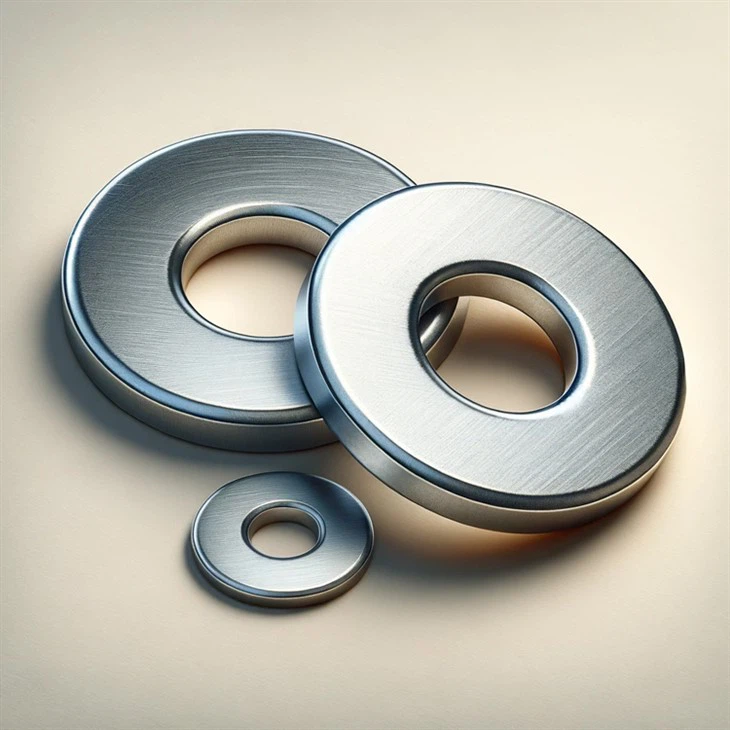
Before we discuss their magnetic properties, let's first understand what Type A Plain Washers are. Type A Plain Washers are simple, flat, and circular metal discs with a central hole. They are commonly used in a wide range of applications, including machinery, automotive, construction, and electrical equipment. Their primary function is to distribute the load of a threaded fastener, such as a bolt or a nut, over a larger surface area, preventing damage to the material being fastened and ensuring a secure connection.
You can find more information about Type A Plain Washers on our website: Type A Plain Washers.
The Science of Magnetism in Metals
To understand whether Type A Plain Washers are magnetic, we need to have a basic understanding of magnetism in metals. Magnetism in metals is primarily determined by their atomic structure and the presence of certain elements. Metals can be classified into three main categories based on their magnetic properties: ferromagnetic, paramagnetic, and diamagnetic.

- Ferromagnetic Metals: These metals are strongly attracted to magnets and can be magnetized themselves. Examples of ferromagnetic metals include iron, nickel, cobalt, and some of their alloys. Ferromagnetic materials have unpaired electrons in their atomic structure, which align in the presence of a magnetic field, creating a strong magnetic force.
- Paramagnetic Metals: Paramagnetic metals are weakly attracted to magnets. They have some unpaired electrons, but the alignment of these electrons is not as strong as in ferromagnetic materials. Examples of paramagnetic metals include aluminum, platinum, and manganese.
- Diamagnetic Metals: Diamagnetic metals are repelled by magnets. They have all their electrons paired, and when exposed to a magnetic field, they create a weak magnetic field in the opposite direction, resulting in a repulsive force. Examples of diamagnetic metals include copper, silver, and gold.
Magnetic Properties of Type A Plain Washers
The magnetic properties of Type A Plain Washers depend on the material from which they are made. Type A Plain Washers can be manufactured from a variety of materials, including steel, stainless steel, brass, and aluminum.
- Steel Type A Plain Washers: Steel is a ferromagnetic material, primarily composed of iron with varying amounts of carbon and other elements. As a result, steel Type A Plain Washers are magnetic. They are strongly attracted to magnets and can be magnetized if exposed to a strong magnetic field. Steel washers are commonly used in applications where high strength and magnetic properties are required.
- Stainless Steel Type A Plain Washers: Stainless steel is an alloy of iron, chromium, nickel, and other elements. The magnetic properties of stainless steel Type A Plain Washers depend on the specific grade of stainless steel. Some grades of stainless steel, such as austenitic stainless steel (e.g., 304 and 316), are non - magnetic or only weakly magnetic. This is because the addition of nickel and chromium changes the atomic structure of the steel, reducing the number of unpaired electrons. On the other hand, ferritic and martensitic stainless steels are magnetic, similar to regular steel.
- Brass Type A Plain Washers: Brass is an alloy of copper and zinc. Copper is a diamagnetic metal, and zinc is a paramagnetic metal. Overall, brass is considered to be non - magnetic or only very weakly magnetic. Brass Type A Plain Washers are not attracted to magnets and do not exhibit significant magnetic properties.
- Aluminum Type A Plain Washers: Aluminum is a paramagnetic metal. It is only weakly attracted to magnets. Aluminum Type A Plain Washers have very low magnetic susceptibility and are not commonly used in applications where magnetic properties are a concern.
Factors Influencing the Magnetism of Type A Plain Washers
In addition to the material, several other factors can influence the magnetism of Type A Plain Washers:
- Heat Treatment: Heat treatment processes, such as annealing, quenching, and tempering, can alter the microstructure of the metal and affect its magnetic properties. For example, heat treatment can change the alignment of the atoms in a ferromagnetic material, either increasing or decreasing its magnetic strength.
- Alloying Elements: The addition of alloying elements to the base metal can modify its magnetic properties. For instance, adding small amounts of certain elements to steel can enhance or reduce its magnetism.
- Surface Coating: Some Type A Plain Washers may have a surface coating, such as zinc plating or powder coating. These coatings are generally non - magnetic and do not significantly affect the magnetic properties of the underlying washer. However, in some cases, the coating process may introduce impurities or alter the surface properties of the washer, which could have a minor impact on its magnetism.
Applications Based on Magnetic Properties
The magnetic properties of Type A Plain Washers play a crucial role in determining their suitability for different applications:
- Magnetic Applications: In applications where magnetic attraction is required, such as in magnetic assemblies or electromagnetic devices, steel Type A Plain Washers are the preferred choice. Their strong magnetic properties allow them to be used in conjunction with magnets to create a secure and stable connection.
- Non - Magnetic Applications: In applications where magnetic interference is a concern, such as in electronic devices or sensitive instrumentation, non - magnetic Type A Plain Washers made of brass or certain grades of stainless steel are used. These washers prevent unwanted magnetic fields from affecting the performance of the equipment.
Regular Helical Spring - Lock Washers and Magnetism
Another type of washer commonly used in conjunction with Type A Plain Washers is the Regular Helical Spring - Lock Washer. These washers are designed to provide a locking action by exerting a spring force between the nut and the surface of the material being fastened.
The magnetic properties of Regular Helical Spring - Lock Washers also depend on the material from which they are made. Similar to Type A Plain Washers, steel spring - lock washers are magnetic, while those made from non - ferromagnetic materials such as brass or aluminum are non - magnetic or weakly magnetic.
You can learn more about Regular Helical Spring - Lock Washers on our website: Regular Helical Spring - Lock Washers.
Conclusion
In conclusion, the magnetic properties of Type A Plain Washers vary depending on the material from which they are made. Steel washers are magnetic, while brass and some grades of stainless steel washers are non - magnetic or only weakly magnetic. Aluminum washers have very low magnetic susceptibility. Understanding the magnetic properties of Type A Plain Washers is essential for selecting the right washer for your specific application.
If you are in the market for Type A Plain Washers or have any questions about their magnetic properties, I encourage you to reach out to me. I am here to help you find the perfect washers for your needs. Whether you require magnetic or non - magnetic washers, I can provide you with high - quality products and expert advice. Contact me today to discuss your requirements and start a procurement negotiation.
References
- Callister, W. D., & Rethwisch, D. G. (2017). Materials Science and Engineering: An Introduction. Wiley.
- ASM Handbook Committee. (2004). ASM Handbook, Volume 1: Properties and Selection: Irons, Steels, and High - Performance Alloys. ASM International.