




What is the purpose of a wave washer?
 Dec 02, 2025|
 In the realm of mechanical engineering and industrial applications, washers play a crucial role. Among the various types of washers, wave washers stand out for their unique design and specific functions. As a seasoned washers supplier, I've had the privilege of witnessing firsthand the diverse applications and benefits of wave washers. In this blog, I'll delve into the purpose of wave washers, exploring their design, functionality, and the industries that rely on them.
Understanding Wave Washers
Wave washers, also known as wave springs, are flat washers with a wavy shape. This distinctive design sets them apart from other types of washers, such as Type A Plain Washers which are flat and circular, and Regular Helical Spring-Lock Washers that have a coiled structure. The wave pattern on a wave washer provides it with a spring-like quality, allowing it to compress and expand under load.

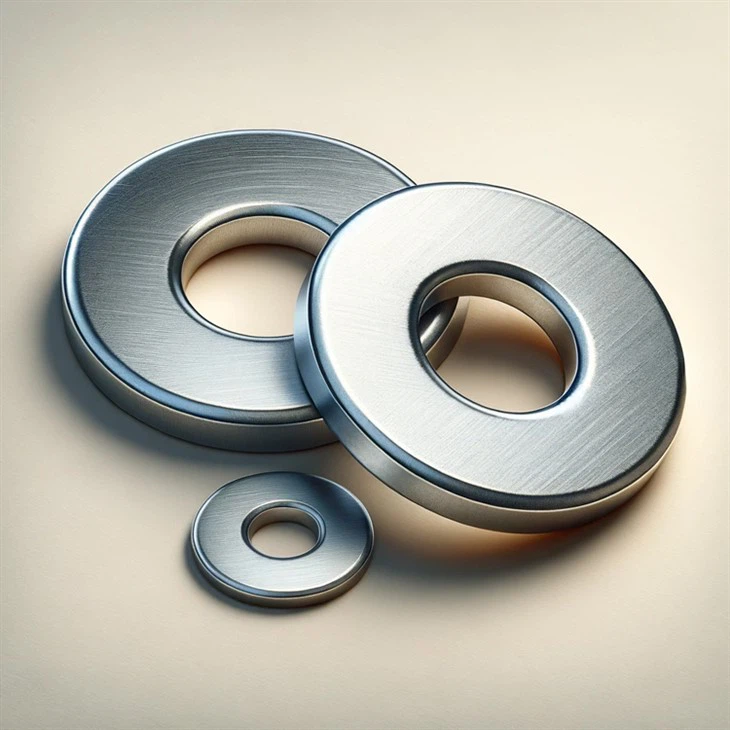
The manufacturing process of wave washers involves precision stamping and forming. High-quality materials, such as stainless steel, carbon steel, or phosphor bronze, are used to ensure durability and performance. The number of waves, the height of the waves, and the thickness of the washer are all carefully engineered to meet specific application requirements.
The Purpose of Wave Washers
1. Providing Axial Preload
One of the primary purposes of wave washers is to provide axial preload in a mechanical assembly. Axial preload is the force applied along the axis of a shaft or a bolt to prevent loosening due to vibration, shock, or thermal expansion. In applications where components need to be held tightly together, wave washers act as a cushion, maintaining a constant pressure between the mating surfaces.
For example, in automotive engines, wave washers are used in valve train assemblies to ensure proper valve clearance. The wave washer compresses slightly when the engine is assembled, creating a preload that keeps the valve components in place. This helps to reduce noise, improve performance, and extend the lifespan of the engine.
2. Absorbing Shock and Vibration
Wave washers are excellent at absorbing shock and vibration. Their spring-like design allows them to deform under load, dissipating energy and reducing the impact on the surrounding components. In machinery and equipment that operate in high-vibration environments, such as industrial compressors or power tools, wave washers can help to prevent damage and improve reliability.
Consider a washing machine. The constant agitation and movement during the wash cycle generate significant vibration. Wave washers are used in the motor mounts and other critical components to absorb this vibration, preventing it from being transmitted to the rest of the machine. This not only reduces noise but also protects the internal components from premature wear and failure.
3. Compensating for Tolerance Stack-Up
Tolerance stack-up is a common issue in mechanical assemblies. It occurs when the cumulative tolerances of multiple components result in a dimensional variation that can affect the performance of the assembly. Wave washers can be used to compensate for these variations by providing a flexible cushion that can adjust to the changing dimensions.
In a precision instrument, such as a microscope or a camera, even small dimensional variations can have a significant impact on the accuracy of the device. Wave washers are used to ensure that the components are properly aligned and that the required preload is maintained, despite any tolerance stack-up.
4. Adjusting Clearance
Wave washers can also be used to adjust the clearance between components. By changing the number of waves or the thickness of the washer, the amount of compression and the resulting clearance can be precisely controlled. This is particularly useful in applications where a specific clearance is required for optimal performance.
In a gearbox, for example, the clearance between the gears and the bearings needs to be carefully adjusted to ensure smooth operation and minimize wear. Wave washers can be used to fine-tune this clearance, allowing for precise control over the performance of the gearbox.
Applications of Wave Washers
Wave washers are used in a wide range of industries and applications. Here are some examples:
1. Automotive Industry
As mentioned earlier, wave washers are used in automotive engines, transmissions, and other critical components. They are also used in steering systems, suspension systems, and braking systems to provide preload, absorb vibration, and compensate for tolerance stack-up.
2. Aerospace Industry
In the aerospace industry, where reliability and precision are of utmost importance, wave washers are used in aircraft engines, landing gear, and flight control systems. They help to ensure the safety and performance of the aircraft by maintaining proper preload and absorbing shock and vibration.
3. Electronics Industry
Wave washers are used in electronic devices, such as smartphones, laptops, and tablets, to provide a secure connection between components. They help to prevent loosening due to vibration and shock, ensuring the reliability of the device.
4. Industrial Machinery
In industrial machinery, wave washers are used in a variety of applications, including pumps, compressors, conveyors, and machine tools. They help to improve the performance and reliability of the machinery by providing preload, absorbing vibration, and compensating for tolerance stack-up.
Conclusion
Wave washers are a versatile and essential component in many mechanical assemblies. Their ability to provide axial preload, absorb shock and vibration, compensate for tolerance stack-up, and adjust clearance makes them invaluable in a wide range of industries and applications.
As a washers supplier, I understand the importance of providing high-quality wave washers that meet the specific needs of our customers. Whether you're in the automotive, aerospace, electronics, or industrial machinery industry, we have the expertise and the resources to supply you with the right wave washers for your application.
If you're interested in learning more about wave washers or other types of washers, or if you have a specific application that requires a custom solution, please don't hesitate to contact us. Our team of experts is ready to assist you with your procurement needs and help you find the best washer solution for your project.
References
- "Mechanical Design Handbook" by Robert C. Juvinall and Kurt M. Marshek
- "Machine Design: An Integrated Approach" by Robert L. Norton
- "Handbook of Springs" by William A. Roth