




What is the modulus of elasticity of Type A Plain Washers?
 Aug 05, 2025|
 As a supplier of Type A Plain Washers, I often encounter inquiries regarding various technical aspects of these washers. One question that comes up quite frequently is about the modulus of elasticity of Type A Plain Washers. In this blog post, I'll delve into what the modulus of elasticity is, its significance for Type A Plain Washers, and how it impacts their performance.
Understanding the Modulus of Elasticity
The modulus of elasticity, also known as Young's modulus, is a fundamental material property that measures the stiffness of a material. It represents the ratio of stress (force per unit area) to strain (deformation per unit length) within the elastic range of a material. In simpler terms, it tells us how much a material will stretch or compress under a given load before it starts to deform permanently.
Mathematically, the modulus of elasticity (E) is expressed as:
[ E = \frac{\sigma}{\epsilon} ]
Where:
- ( \sigma ) is the stress applied to the material
- ( \epsilon ) is the resulting strain
The unit of modulus of elasticity is typically pascals (Pa) in the SI system, but it can also be expressed in gigapascals (GPa) for convenience, especially when dealing with metals.
Significance of the Modulus of Elasticity for Type A Plain Washers
For Type A Plain Washers, the modulus of elasticity plays a crucial role in determining their performance and suitability for different applications. Here are some key aspects where the modulus of elasticity is significant:
Load Distribution
Type A Plain Washers are commonly used to distribute the load of a fastener over a larger area, preventing damage to the surface being fastened. A washer with a higher modulus of elasticity will be stiffer and less likely to deform under load. This means it can effectively distribute the load without excessive compression, ensuring a more even distribution of force and reducing the risk of surface damage.
Springback
When a Type A Plain Washer is compressed between a fastener and a surface, it undergoes elastic deformation. The modulus of elasticity determines how much the washer will spring back to its original shape once the load is removed. A washer with a higher modulus of elasticity will have better springback properties, which is important for maintaining a consistent clamping force over time.
Fatigue Resistance
In applications where the washer is subjected to repeated loading and unloading cycles, such as in vibrating machinery, the modulus of elasticity can affect its fatigue resistance. A stiffer washer with a higher modulus of elasticity is less likely to develop cracks or fail due to fatigue, ensuring a longer service life.
Factors Affecting the Modulus of Elasticity of Type A Plain Washers
The modulus of elasticity of Type A Plain Washers is primarily determined by the material from which they are made. Different materials have different moduli of elasticity, and the choice of material depends on the specific requirements of the application. Here are some common materials used for Type A Plain Washers and their approximate moduli of elasticity:
- Steel: Steel is one of the most commonly used materials for Type A Plain Washers due to its high strength and durability. The modulus of elasticity of steel typically ranges from 190 to 210 GPa, depending on the specific grade and composition.
- Stainless Steel: Stainless steel washers offer excellent corrosion resistance, making them suitable for applications in harsh environments. The modulus of elasticity of stainless steel is similar to that of regular steel, ranging from 190 to 200 GPa.
- Brass: Brass washers are known for their good electrical conductivity and corrosion resistance. The modulus of elasticity of brass is relatively lower than that of steel, typically around 100 GPa.
- Aluminum: Aluminum washers are lightweight and have good corrosion resistance. The modulus of elasticity of aluminum is approximately 70 GPa, which is significantly lower than that of steel.
In addition to the material, other factors such as the manufacturing process and heat treatment can also affect the modulus of elasticity of Type A Plain Washers. For example, cold working can increase the strength and hardness of the washer, but it may also slightly reduce its modulus of elasticity.
Measuring the Modulus of Elasticity of Type A Plain Washers
Measuring the modulus of elasticity of Type A Plain Washers typically involves conducting a tensile test on a sample of the washer material. During the test, a known load is applied to the sample, and the resulting deformation is measured using a strain gauge or other measuring device. The stress and strain values are then calculated, and the modulus of elasticity is determined using the formula mentioned earlier.
It's important to note that the modulus of elasticity is a material property and is independent of the size or shape of the washer. However, the dimensions of the washer can affect its overall stiffness and performance in a specific application.
Comparing Type A Plain Washers with Other Types of Washers
When considering the modulus of elasticity, it's also useful to compare Type A Plain Washers with other types of washers, such as Regular Helical Spring-Lock Washers. Spring-lock washers are designed to provide a locking action by exerting a spring force between the fastener and the surface being fastened. They typically have a lower modulus of elasticity compared to Type A Plain Washers, as they are intended to deform elastically to provide the locking effect.
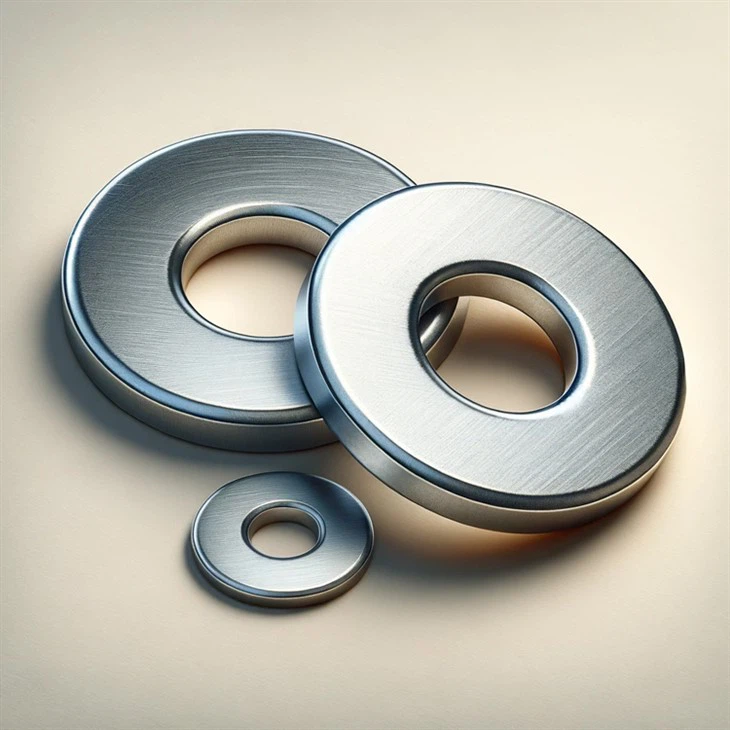

In contrast, Type A Plain Washers are primarily used for load distribution and do not rely on elastic deformation for their functionality. Their higher modulus of elasticity makes them stiffer and more suitable for applications where a consistent load distribution is required.
Conclusion
In conclusion, the modulus of elasticity is an important property of Type A Plain Washers that affects their performance, load distribution, springback, and fatigue resistance. The choice of material for the washer plays a crucial role in determining its modulus of elasticity, and different materials offer different advantages depending on the specific application requirements.
If you're in need of high-quality Type A Plain Washers for your project, I invite you to reach out to discuss your specific needs. Our team of experts can help you select the right washer material and dimensions to ensure optimal performance and reliability. Whether you're working on a small DIY project or a large industrial application, we have the expertise and resources to provide you with the best solutions. Contact us today to start the conversation and take the first step towards a successful project.
References
- Callister, W. D., & Rethwisch, D. G. (2010). Materials Science and Engineering: An Introduction. John Wiley & Sons.
- Ashby, M. F., & Jones, D. R. H. (2012). Engineering Materials 1: An Introduction to Properties, Applications, and Design. Butterworth-Heinemann.