




What are the different types of washers?
 Jul 15, 2025|
 Hey there! As a washer supplier, I've seen it all when it comes to different types of washers. Washers are those small but mighty components that play a crucial role in various applications. They're used to distribute the load of a threaded fastener, prevent damage to the surface, and sometimes even add a locking feature. In this blog, I'm gonna walk you through the different types of washers you might encounter.
Plain Washers
Plain washers are the most basic type of washers. They're just flat, circular pieces with a hole in the middle. Their main job is to spread the load of a bolt or nut over a larger area. This helps prevent the fastener from digging into the material it's being tightened against, which can cause damage or even failure over time.
One common type of plain washer is the Type A Plain Washers. These are typically used in general-purpose applications. They come in different sizes and materials, like steel, stainless steel, and brass. Steel washers are strong and durable, making them suitable for most industrial applications. Stainless steel washers, on the other hand, are resistant to corrosion, so they're great for outdoor or wet environments. Brass washers are often used in electrical applications because they're good conductors of electricity.
Spring Washers
Spring washers are designed to provide a spring-like action. They're used to maintain tension on a fastener and prevent it from loosening due to vibration or other external forces. There are a few different types of spring washers, but the most common ones are the helical spring-lock washers.
Regular Helical Spring-Lock Washers are probably the most well-known type of spring washers. They have a coiled shape that creates a spring force when compressed. When you tighten a bolt or nut with a helical spring-lock washer, the washer exerts a constant pressure on the fastener, keeping it tight. These washers are commonly used in automotive, machinery, and construction applications.
Another type of spring washer is the wave washer. Wave washers have a wavy shape that provides a spring effect. They're often used in applications where space is limited, as they can be thinner than helical spring-lock washers. Wave washers are commonly used in electronics, appliances, and small machinery.
Lock Washers
Lock washers are specifically designed to prevent fasteners from loosening. They work by biting into the surface of the material or the fastener itself, creating a locking effect. There are several types of lock washers, each with its own unique design and function.
Split lock washers are one of the most common types of lock washers. They have a split in the circumference, which allows them to be compressed and create a spring-like action. When you tighten a bolt or nut with a split lock washer, the washer digs into the surface of the material and the fastener, preventing it from turning. Split lock washers are often used in applications where vibration is a concern, such as automotive engines and machinery.
Tooth lock washers have teeth on the outer or inner circumference. These teeth dig into the surface of the material or the fastener, providing a locking effect. Tooth lock washers are commonly used in applications where a high level of security is required, such as in aircraft and aerospace components.
Fender Washers
Fender washers are large, flat washers with a relatively large outer diameter compared to the inner diameter. They're called fender washers because they were originally used on automobile fenders. However, they're now used in a wide variety of applications, including electrical work, plumbing, and furniture assembly.

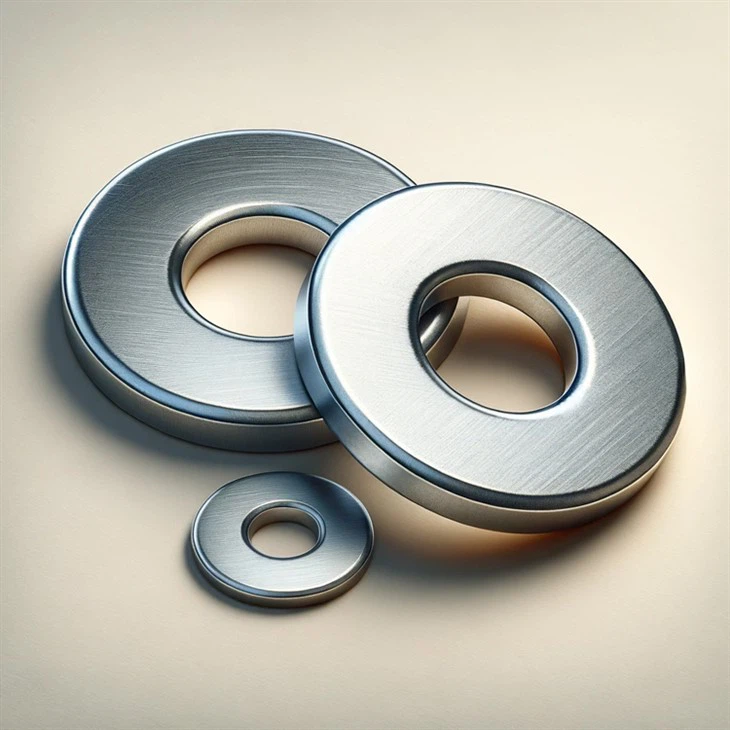
Fender washers are great for distributing the load of a fastener over a large area. They're often used when the surface material is soft or brittle, as they help prevent the fastener from pulling through the material. Fender washers are also commonly used in applications where a large surface area is needed to provide stability, such as in the installation of light fixtures or switches.
Shoulder Washers
Shoulder washers have a shoulder or collar on one side. The shoulder provides a precise location for the fastener and helps to align it properly. Shoulder washers are commonly used in applications where accurate alignment is critical, such as in machinery and equipment.
The shoulder on a shoulder washer can also be used to provide a bearing surface for a rotating part. This helps to reduce friction and wear, and extends the life of the component. Shoulder washers are often used in conjunction with other types of washers, such as plain washers or spring washers, to provide additional support and stability.
Conclusion
As you can see, there are many different types of washers, each with its own unique design and function. Choosing the right type of washer for your application is important to ensure the safety and reliability of your project. Whether you need a plain washer to distribute the load, a spring washer to prevent loosening, or a lock washer to provide a high level of security, I've got you covered.
If you're in the market for washers, I'd love to hear from you. I can help you choose the right type of washer for your specific needs and provide you with high-quality products at competitive prices. Just reach out to me, and we can start discussing your requirements.
References
- Machinery's Handbook, 31st Edition
- Fastener Standards Handbook