




How long do Type A Plain Washers last?
 Aug 06, 2025|
 Hey there! As a supplier of Type A Plain Washers, I often get asked about how long these little guys last. Well, it's not a one - size - fits - all answer, and there are quite a few factors that come into play.
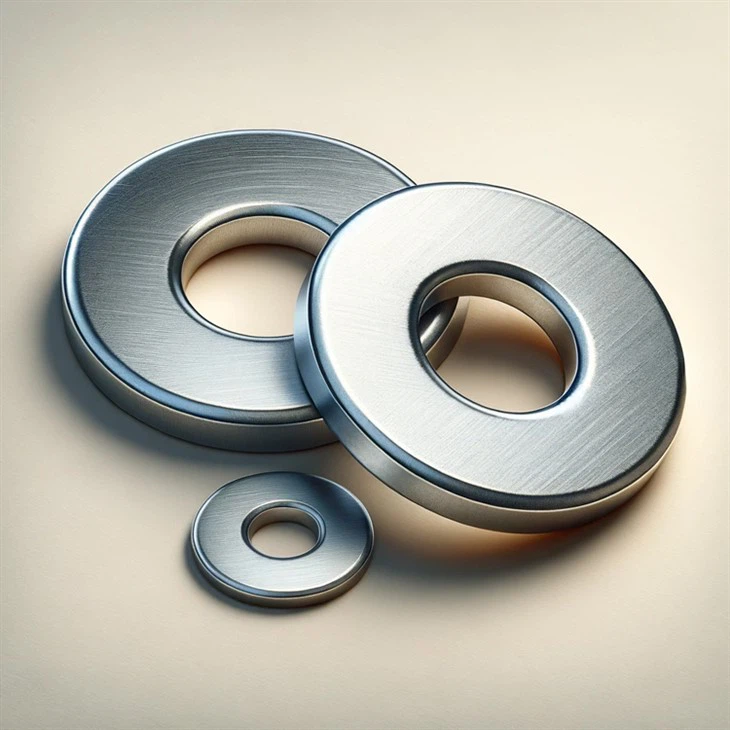

First off, let's talk a bit about what Type A Plain Washers are. You can check out more details about them on our website Type A Plain Washers. These washers are simple yet incredibly useful. They're flat, circular pieces with a hole in the middle, and they're mainly used to distribute the load of a threaded fastener, like a bolt or a nut. They prevent damage to the surface being fastened and help keep everything tight.
One of the biggest factors that affect the lifespan of Type A Plain Washers is the material they're made of. We offer these washers in a variety of materials, such as steel, stainless steel, and brass. Steel washers are the most common. They're strong and relatively inexpensive. But if they're exposed to moisture and oxygen for a long time, they can rust. Rust weakens the washer over time, and it might start to break or lose its ability to distribute the load properly. In a dry environment, a steel Type A Plain Washer can last for years, maybe even decades. But in a damp or corrosive setting, like near the ocean or in a chemical plant, its lifespan could be reduced to just a few months or a couple of years.
Stainless steel washers, on the other hand, are much more resistant to corrosion. They contain chromium, which forms a thin, protective layer on the surface of the washer. This layer prevents oxygen and moisture from reaching the metal underneath, so rust and corrosion are less likely to occur. Stainless steel Type A Plain Washers can last a really long time, even in harsh environments. You can expect them to serve you well for 10 to 20 years or more, depending on the level of exposure to corrosive elements.
Brass washers are also an option. Brass is a copper - zinc alloy, and it has good corrosion resistance, especially in certain environments. It's also quite malleable, which means it can conform to the surface it's in contact with. Brass washers can last for a long time, typically around 10 - 15 years, but they might discolor over time due to oxidation.
Another important factor is the load and stress the washers are subjected to. If a Type A Plain Washer is used in a high - stress application, like in a heavy - duty machinery where there are constant vibrations and high pressures, it will experience more wear and tear. The repeated compression and expansion can cause the washer to deform or crack. In such cases, the lifespan of the washer can be significantly reduced. Even a high - quality washer might only last a few years under extreme stress.
On the contrary, if the washer is used in a low - stress situation, like in a simple household fixture where the load is minimal and there are no vibrations, it can last for a very long time. You might never have to replace it in your lifetime.
The quality of the manufacturing process also plays a role. At our company, we take great care in producing Type A Plain Washers. We use high - precision machinery and strict quality control measures. This ensures that the washers have the right dimensions, smooth surfaces, and consistent material properties. Washers made with poor quality control might have defects, such as uneven thickness or rough edges. These defects can cause premature failure, reducing the lifespan of the washer.
Now, let's talk about how to tell if a Type A Plain Washer needs to be replaced. One obvious sign is visible damage, like cracks, chips, or excessive deformation. If you notice that the washer is no longer flat or has lost its shape, it's time to get a new one. Another sign is rust or corrosion. If a steel washer has started to rust, it's a good idea to replace it before the rust spreads and causes more problems.
Sometimes, you might also notice that the fastener is becoming loose more easily. This could be because the washer is no longer effectively distributing the load. In such cases, it's worth checking the washer and replacing it if necessary.
It's also important to note that the lifespan of Type A Plain Washers can be extended with proper maintenance. For example, if you're using steel washers in a potentially corrosive environment, you can apply a protective coating, like paint or a rust - inhibiting oil. This can slow down the corrosion process and keep the washer in good condition for longer.
In some applications, you might consider using other types of washers in combination with Type A Plain Washers. For instance, Regular Helical Spring - Lock Washers can be used to prevent the fastener from loosening due to vibrations. Using these washers together can enhance the overall performance and longevity of the fastening system.
So, to sum it up, the lifespan of Type A Plain Washers can vary widely depending on the material, the load and stress they're under, the manufacturing quality, and the environment they're in. In general, in a low - stress, dry environment, a well - made washer can last for decades. But in a high - stress, corrosive setting, it might only last a few years.
If you're in the market for Type A Plain Washers or have any questions about their lifespan and application, don't hesitate to reach out. We're here to help you choose the right washers for your needs and ensure that your fastening systems work effectively for as long as possible. Whether it's for a small DIY project or a large - scale industrial application, we've got the expertise and the products to meet your requirements.
References
- "Handbook of Fasteners and Their Applications" by H. Arthur Kovan
- "Materials Science and Engineering: An Introduction" by William D. Callister, Jr. and David G. Rethwisch