




How do washers improve the stability of a structure?
 Oct 21, 2025|
 In the realm of construction and mechanical engineering, the stability of a structure is of paramount importance. A stable structure ensures safety, longevity, and optimal performance. One often-overlooked component that plays a crucial role in enhancing the stability of a structure is the washer. As a leading washer supplier, I have witnessed firsthand the significant impact that washers can have on the stability of various structures. In this blog post, I will delve into the ways in which washers improve the stability of a structure.
Distribution of Load
One of the primary ways washers enhance the stability of a structure is by distributing the load evenly. When a bolt or a screw is tightened, it exerts a concentrated force on the surface it is in contact with. Without a washer, this force can cause damage to the surface, such as deformation or cracking. A washer acts as a buffer between the bolt head or nut and the surface, spreading the load over a larger area. This reduces the stress on the surface and helps prevent damage, ensuring that the structure remains stable.
For example, in a wooden structure, a washer can prevent the bolt from sinking into the wood, which could weaken the joint over time. By distributing the load, the washer helps maintain the integrity of the joint and the overall stability of the structure. Similarly, in a metal structure, a washer can prevent the bolt from cutting into the metal surface, which could lead to corrosion and structural failure.
Prevention of Loosening
Another important function of washers is to prevent the loosening of bolts and nuts. In a vibrating or dynamic environment, bolts and nuts can gradually loosen over time, which can compromise the stability of the structure. Washers, particularly lock washers, are designed to provide a locking mechanism that resists the loosening effect of vibrations.
Regular Helical Spring-Lock Washers are a type of lock washer that works by exerting a spring force between the bolt head or nut and the surface. This spring force creates friction, which helps prevent the bolt or nut from rotating and loosening. The helical shape of the washer also provides a wedging action that further enhances the locking effect.
In addition to lock washers, other types of washers, such as split washers and toothed washers, can also help prevent loosening. Split washers have a split in the middle, which creates a spring-like action when the washer is compressed. This spring action provides friction and helps keep the bolt or nut in place. Toothed washers have teeth on the surface, which bite into the surface and prevent the bolt or nut from rotating.
Alignment and Positioning
Washers can also play a role in aligning and positioning components in a structure. In some cases, a washer can be used as a spacer to ensure that components are properly aligned and spaced apart. This is particularly important in precision engineering applications, where even a small misalignment can affect the performance of the structure.
For example, in a machine tool, washers can be used to adjust the clearance between moving parts, ensuring smooth operation and preventing excessive wear. In a building structure, washers can be used to level and align beams and columns, ensuring that the structure is stable and plumb.

Corrosion Protection
In addition to improving the mechanical stability of a structure, washers can also provide corrosion protection. In a corrosive environment, such as a marine or industrial setting, metal components are prone to corrosion, which can weaken the structure over time. Washers can be made from materials that are resistant to corrosion, such as stainless steel or zinc-plated steel, which can help protect the bolts and nuts from corrosion.
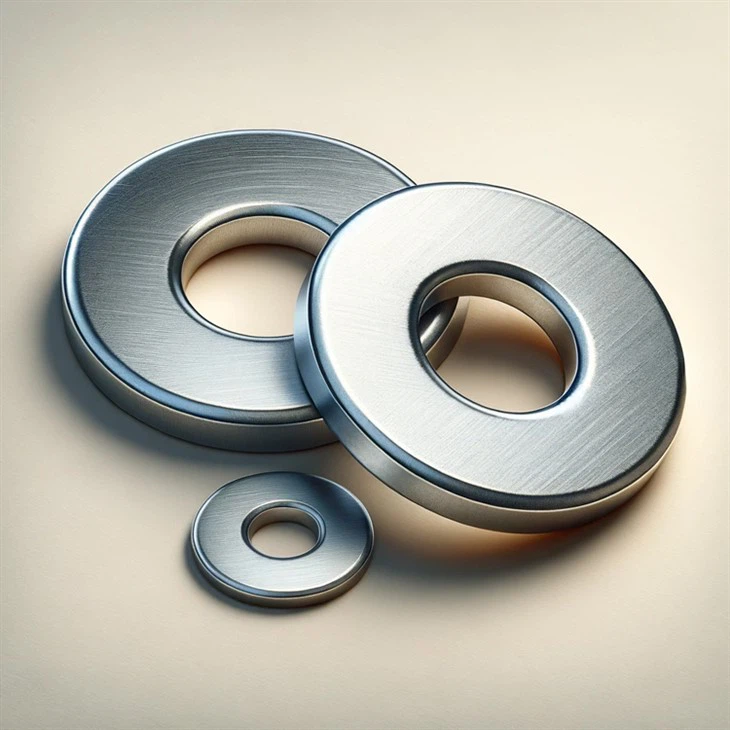
Type A Plain Washers are a common type of washer that can be used for corrosion protection. These washers are made from a variety of materials, including stainless steel, brass, and nylon, which are all resistant to corrosion. By using corrosion-resistant washers, the lifespan of the structure can be extended, and the need for frequent maintenance and replacement can be reduced.
Selection of Washers
When selecting washers for a particular application, it is important to consider several factors, including the type of load, the environment, and the material of the components. The size and thickness of the washer should also be carefully selected to ensure that it provides the necessary support and protection.
For example, in a high-load application, a thicker and larger washer may be required to distribute the load evenly. In a corrosive environment, a washer made from a corrosion-resistant material should be selected. In a precision engineering application, a washer with a high degree of accuracy and flatness may be required.
As a washer supplier, I can provide expert advice on the selection of washers for different applications. I have a wide range of washers in stock, including regular helical spring-lock washers, type A plain washers, and many other types of washers. I can also provide custom-made washers to meet the specific requirements of my customers.
Conclusion
In conclusion, washers are an essential component in many structures, playing a crucial role in enhancing the stability, safety, and longevity of the structure. By distributing the load evenly, preventing loosening, aligning and positioning components, and providing corrosion protection, washers help ensure that the structure remains stable and performs optimally.
As a washer supplier, I am committed to providing high-quality washers and excellent customer service. If you are in need of washers for your next project, I encourage you to contact me to discuss your requirements. I can provide you with the right washers for your application and help you ensure the stability and success of your project.
References
- Budynas, R. G., & Nisbett, J. K. (2011). Shigley's Mechanical Engineering Design. McGraw-Hill.
- Juvinall, R. C., & Marshek, K. M. (2006). Fundamentals of Machine Component Design. Wiley.
- Marks, L. S. (2007). Standard Handbook for Mechanical Engineers. McGraw-Hill.