




How do I determine the hardness of a washer?
 Dec 18, 2025|
 Determining the hardness of a washer is a critical aspect of ensuring its quality and performance, especially when you're a washer supplier like me. In the washer industry, the hardness of a washer can significantly impact its functionality, durability, and suitability for various applications. In this blog, I'll share the methods I use to determine the hardness of washers, which are essential for providing high - quality products to my customers.
Why Hardness Matters in Washers
Before diving into the determination methods, it's important to understand why hardness is so crucial for washers. Washers are used in countless applications, from automotive engines to household appliances. Their primary functions include distributing the load of a threaded fastener, preventing loosening, and protecting the surface of the materials they are used with.
A washer with the right hardness can withstand the forces applied during installation and use. If a washer is too soft, it may deform easily under pressure, leading to loosening of the fastener and potential failure of the assembly. On the other hand, if a washer is too hard, it may be brittle and prone to cracking, which also compromises its performance.
Common Methods for Determining Washer Hardness
Rockwell Hardness Testing
One of the most widely used methods for determining the hardness of washers is Rockwell hardness testing. This method measures the depth of penetration of an indenter into the material under a specific load. The Rockwell hardness scale uses different combinations of indenters and loads depending on the material being tested.
For washers, the Rockwell B and C scales are commonly used. The Rockwell B scale uses a 1/16 - inch diameter steel ball indenter with a minor load of 10 kgf and a major load of 100 kgf. This scale is suitable for softer materials. The Rockwell C scale, on the other hand, uses a conical diamond indenter (Brale indenter) with a minor load of 10 kgf and a major load of 150 kgf, and it is used for harder materials.
To perform a Rockwell hardness test on a washer, I first ensure that the surface of the washer is flat and smooth. Any irregularities on the surface can affect the accuracy of the test. Then, I place the washer on the anvil of the Rockwell hardness tester and apply the minor load to seat the indenter. After that, I apply the major load for a specified time, usually 15 seconds. The hardness value is then read directly from the scale on the tester.
Brinell Hardness Testing
Brinell hardness testing is another method that can be used to determine the hardness of washers. In this method, a hardened steel or carbide ball of a specific diameter is pressed into the material under a known load for a specified time. The diameter of the indentation left on the material is then measured, and the Brinell hardness number (BHN) is calculated using a formula.
The Brinell test is typically used for materials with a relatively large grain size or for materials that are too soft for Rockwell C testing. For washers, the Brinell test can provide a more accurate measurement of the overall hardness of the material, especially for thicker washers.
To conduct a Brinell hardness test, I use a Brinell hardness tester. I place the washer on the anvil of the tester and apply the load using the ball indenter. After the specified time, I remove the load and measure the diameter of the indentation using a microscope. The BHN is then calculated based on the load, the diameter of the ball, and the diameter of the indentation.
Vickers Hardness Testing
Vickers hardness testing is a micro - hardness testing method that is suitable for testing small areas or thin materials, such as washers. In this method, a square - based pyramid - shaped diamond indenter is pressed into the material under a specific load. The diagonal lengths of the indentation left on the material are measured, and the Vickers hardness number (HV) is calculated.
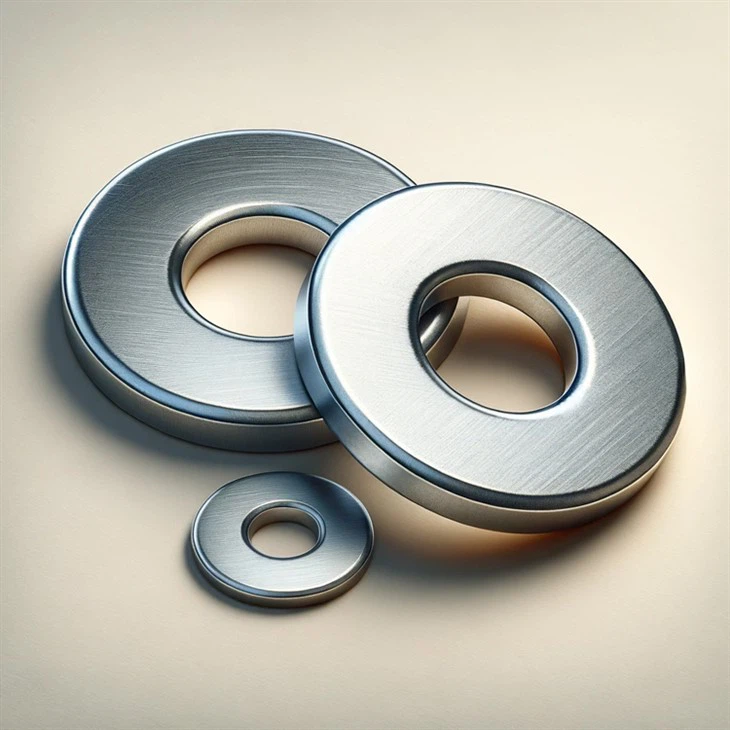

The Vickers test is very accurate and can be used to measure the hardness of different phases or microstructures within the washer material. It is also useful for testing the hardness of the surface layer of the washer, which may be affected by heat treatment or surface finishing processes.
To perform a Vickers hardness test, I use a Vickers hardness tester. I place the washer on the stage of the tester and focus the microscope on the area where I want to test. Then, I apply the load using the indenter and measure the diagonal lengths of the indentation using the microscope. The HV is calculated based on the load and the average diagonal length of the indentation.
Factors Affecting Washer Hardness
Several factors can affect the hardness of washers. One of the most important factors is the material composition. Different materials, such as steel, stainless steel, brass, and aluminum, have different inherent hardness values. For example, steel washers are generally harder than aluminum washers.
Heat treatment is another significant factor. Processes like quenching and tempering can significantly increase the hardness of steel washers. Quenching involves rapidly cooling the washer from a high temperature, which forms a hard martensitic structure. Tempering is then used to reduce the brittleness of the quenched material and improve its toughness.
Surface finishing processes can also affect the hardness of washers. For example, nitriding can increase the surface hardness of steel washers by diffusing nitrogen into the surface layer. This can improve the wear resistance and corrosion resistance of the washers.
Importance of Consistent Hardness in Washers
As a washer supplier, I understand the importance of providing washers with consistent hardness. Inconsistent hardness can lead to variations in the performance of the washers. For example, if some washers in a batch are too hard and others are too soft, it can cause problems during installation and use.
To ensure consistent hardness, I have strict quality control measures in place. I carefully select the raw materials from reliable suppliers and conduct regular hardness testing during the manufacturing process. I also keep detailed records of the hardness test results for each batch of washers to track the quality and identify any potential issues.
Applications and Hardness Requirements
Different applications have different hardness requirements for washers. For example, in automotive engines, where high - strength and high - temperature resistance are required, washers with a relatively high hardness are often used. Regular Helical Spring - Lock Washers are commonly used in automotive applications, and they need to have sufficient hardness to withstand the vibrations and high loads.
In contrast, in electronic devices, where the focus is on preventing damage to delicate components, softer washers may be more suitable. Type A Plain Washers are often used in electronic applications, and their hardness is carefully selected to ensure that they can protect the components without causing excessive stress.
Conclusion
Determining the hardness of washers is a complex but essential process for a washer supplier like me. By using methods such as Rockwell, Brinell, and Vickers hardness testing, I can accurately measure the hardness of washers and ensure that they meet the requirements of different applications.
I am committed to providing high - quality washers with consistent hardness. If you are in need of washers for your specific application, I invite you to contact me for a detailed discussion. We can work together to select the right washers with the appropriate hardness to meet your needs.
References
- ASM Handbook Volume 8: Mechanical Testing and Evaluation.
- ASTM Standards for Hardness Testing of Metals.
- Machinery's Handbook, 31st Edition.