




How do I choose washers for a high - precision application?
 Aug 27, 2025|
 How do I choose washers for a high - precision application?
When it comes to high - precision applications, the selection of washers is a critical decision that can significantly impact the performance, reliability, and longevity of your machinery or equipment. As a washer supplier, I've witnessed firsthand the challenges that engineers and procurement professionals face in making the right choice. In this blog post, I'll share some key considerations and guidelines to help you navigate the process of choosing washers for high - precision applications.
1. Understanding the Requirements of High - Precision Applications
High - precision applications demand a high level of accuracy, stability, and repeatability. These applications can be found in various industries, such as aerospace, automotive, medical, and electronics. In aerospace, for example, washers are used in critical components like engine mounts and flight control systems, where any failure can have catastrophic consequences. In the medical field, high - precision washers are essential for devices like surgical instruments and imaging equipment.
The requirements for high - precision washers typically include tight tolerances, high surface finish, and excellent material properties. Tight tolerances ensure that the washer fits precisely into the assembly, while a high surface finish reduces friction and wear. The material properties, such as hardness, corrosion resistance, and fatigue strength, are also crucial to withstand the operating conditions.
2. Material Selection
The choice of material for washers in high - precision applications is of utmost importance. Different materials offer different properties, and the selection should be based on the specific requirements of the application.
- Stainless Steel: Stainless steel is a popular choice due to its excellent corrosion resistance and high strength. It is suitable for applications where the washer will be exposed to moisture, chemicals, or high temperatures. For example, in the automotive industry, stainless steel washers are used in engine components and exhaust systems.
- Brass: Brass is a soft and ductile material with good electrical conductivity. It is often used in electrical and electronic applications, such as circuit boards and connectors. Brass washers can also provide good corrosion resistance in certain environments.
- Phosphor Bronze: Phosphor bronze is a copper - based alloy with high strength, good fatigue resistance, and excellent corrosion resistance. It is commonly used in applications where the washer needs to withstand repeated loading, such as in springs and fasteners.
- Carbon Steel: Carbon steel is a strong and durable material, but it is prone to corrosion. However, with proper surface treatment, such as galvanizing or painting, carbon steel washers can be used in a wide range of applications. They are often used in general industrial applications where cost is a major consideration.
3. Tolerance and Surface Finish
In high - precision applications, tight tolerances are required to ensure a proper fit and function of the washer. The tolerance refers to the allowable deviation from the specified dimensions. For example, a washer with a diameter tolerance of ±0.01 mm will have a more precise fit than one with a tolerance of ±0.1 mm.
The surface finish of the washer also plays an important role. A smooth surface finish reduces friction and wear, which can improve the performance and longevity of the assembly. The surface finish is typically measured in terms of roughness, and a lower roughness value indicates a smoother surface.
4. Washer Type
There are several types of washers available, each with its own unique features and applications. Here are some common types of washers used in high - precision applications:
- Regular Helical Spring - Lock Washers: These washers are designed to prevent loosening of fasteners due to vibration or dynamic loads. They have a helical shape that provides a spring - like action, which helps to maintain the pre - load on the fastener. Regular helical spring - lock washers are commonly used in automotive, aerospace, and machinery applications.
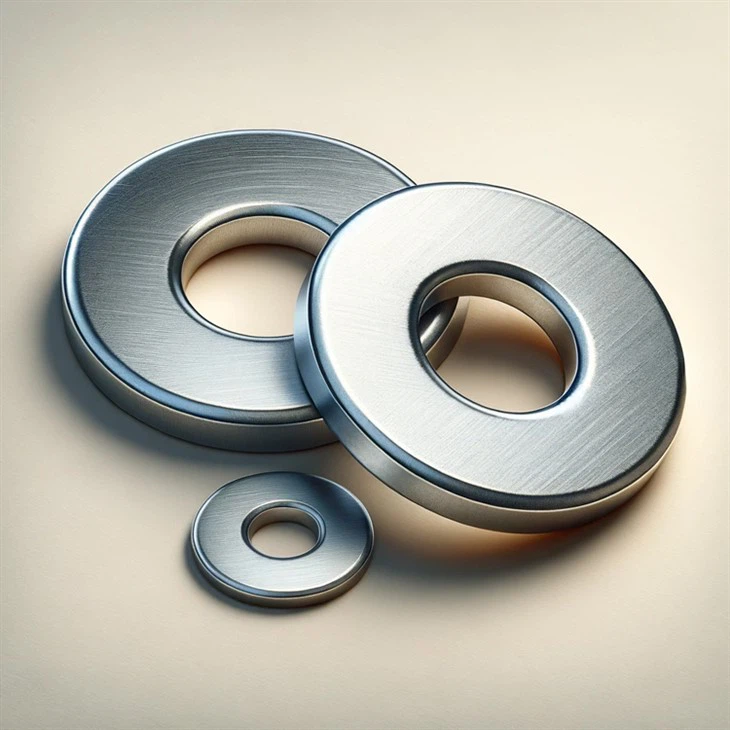
- Type A Plain Washers: Plain washers are the simplest type of washers. They are used to distribute the load of a fastener over a larger area, preventing damage to the surface of the material being fastened. Type A plain washers are commonly used in general industrial applications and are available in a wide range of sizes and materials.
- Wave Washers: Wave washers are used to provide a controlled amount of spring force. They have a wave - like shape that allows them to compress and expand under load. Wave washers are often used in applications where a small amount of axial movement is required, such as in bearings and clutches.
- Tooth Lock Washers: Tooth lock washers have teeth on the inner or outer diameter that bite into the surface of the material being fastened, providing a locking action. They are commonly used in applications where vibration or rotation is a concern, such as in motors and pumps.
5. Compatibility with Fasteners
The washer should be compatible with the fastener used in the application. This includes considerations such as the size, thread pitch, and head style of the fastener. The washer should have the correct inner diameter to fit over the shank of the fastener and the correct outer diameter to distribute the load properly.
In addition, the material of the washer should be compatible with the material of the fastener to prevent galvanic corrosion. Galvanic corrosion occurs when two different metals are in contact in the presence of an electrolyte, such as moisture. To avoid galvanic corrosion, it is recommended to use washers and fasteners made of the same or compatible materials.
6. Testing and Quality Assurance
Before selecting a washer for a high - precision application, it is important to ensure that the washer meets the required standards and specifications. This can be achieved through testing and quality assurance processes.
- Dimensional Inspection: The dimensions of the washer should be checked to ensure that they are within the specified tolerances. This can be done using precision measuring tools, such as calipers and micrometers.
- Material Testing: The material properties of the washer, such as hardness, tensile strength, and corrosion resistance, should be tested to ensure that they meet the requirements of the application. This can be done using various testing methods, such as hardness testing, tensile testing, and corrosion testing.
- Performance Testing: The washer should be tested under simulated operating conditions to ensure that it performs as expected. This can include testing for vibration resistance, fatigue resistance, and load - bearing capacity.
7. Cost Considerations
While quality and performance are important, cost is also a factor that needs to be considered when choosing washers for high - precision applications. The cost of washers can vary depending on the material, size, tolerance, and quantity.
It is important to find a balance between cost and quality. Sometimes, a slightly more expensive washer with better performance and reliability can save money in the long run by reducing maintenance and replacement costs.
Conclusion
Choosing the right washers for high - precision applications is a complex process that requires careful consideration of various factors, including material selection, tolerance, surface finish, washer type, compatibility with fasteners, testing, and cost. As a washer supplier, I can provide you with the expertise and guidance to help you make the right choice for your specific application.

If you are in need of high - precision washers and would like to discuss your requirements further, please feel free to contact me. I look forward to working with you to find the best washer solutions for your high - precision applications.
References
- "Fasteners Handbook" by Machinery's Handbook Editorial Staff
- "Materials Science and Engineering: An Introduction" by William D. Callister, Jr. and David G. Rethwisch
- Industry standards and specifications related to washers and fasteners.