




How do I check the dimensional accuracy of washers?
 Oct 20, 2025|
 Hey there! I'm a supplier of washers, and I often get asked about how to check the dimensional accuracy of these little but crucial components. In this blog post, I'll share some practical methods and tips that I've gathered over the years in the washer business.
Why Dimensional Accuracy Matters
Before we dive into the checking methods, let's quickly talk about why dimensional accuracy is so important for washers. Washers are used in a wide range of applications, from simple household appliances to complex industrial machinery. If a washer's dimensions are off, it can lead to all sorts of problems. For example, an oversized washer might not fit properly in the intended space, while an undersized one may not provide the necessary support or sealing. This can result in equipment failure, reduced performance, and even safety hazards. So, ensuring the dimensional accuracy of washers is essential for their proper functioning and the overall reliability of the systems they're used in.
Tools for Checking Dimensional Accuracy
To check the dimensional accuracy of washers, you'll need a few basic tools. Here are some of the most commonly used ones:
- Calipers: Calipers are probably the most versatile tool for measuring the dimensions of washers. They come in both digital and mechanical versions, and they can measure the outer diameter, inner diameter, and thickness of a washer with high precision. Digital calipers are especially convenient as they provide an easy-to-read digital display of the measurement.
- Micrometers: Micrometers are another precision measuring tool that can be used to measure the thickness of washers. They offer even higher accuracy than calipers, making them ideal for applications where very tight tolerances are required.
- Gauges: There are various types of gauges available for checking the dimensional accuracy of washers. For example, ring gauges can be used to check the outer diameter of a washer, while plug gauges can be used to check the inner diameter. These gauges are designed to have a specific tolerance range, and if a washer fits within the gauge, it means its dimensions are within the acceptable range.
Step-by-Step Guide to Checking Dimensional Accuracy
Now that we have the necessary tools, let's go through the step-by-step process of checking the dimensional accuracy of washers:
Step 1: Inspect the Washer Visually
Before you start taking any measurements, it's a good idea to inspect the washer visually. Look for any obvious defects, such as cracks, chips, or uneven surfaces. These defects can affect the dimensional accuracy of the washer and may also indicate a quality issue with the manufacturing process.
Step 2: Measure the Outer Diameter
Using calipers or a ring gauge, measure the outer diameter of the washer. Make sure to take the measurement at several points around the circumference of the washer to ensure that it's consistent. If the outer diameter is outside the specified tolerance range, the washer may not fit properly in the intended application.
Step 3: Measure the Inner Diameter
Next, measure the inner diameter of the washer using calipers or a plug gauge. Again, take the measurement at multiple points to ensure accuracy. The inner diameter is an important dimension as it determines the fit of the washer on a bolt or shaft.

Step 4: Measure the Thickness
Use a micrometer or calipers to measure the thickness of the washer. Measure the thickness at several points around the washer to check for any variations. The thickness of the washer can affect its load-bearing capacity and the amount of compression it can withstand.
Step 5: Check the Flatness
The flatness of a washer is also an important factor to consider. A washer that is not flat may not provide a proper seal or support, which can lead to problems in the application. You can check the flatness of a washer by placing it on a flat surface and using a feeler gauge to measure the gap between the washer and the surface at various points.
Common Issues and How to Solve Them
During the dimensional checking process, you may encounter some common issues. Here are some of the most common issues and how to solve them:
- Measurement Variations: If you're getting inconsistent measurements, it could be due to a few reasons. First, make sure that the measuring tool is properly calibrated. If the tool is not calibrated correctly, it will give inaccurate measurements. Second, check for any debris or dirt on the washer or the measuring tool, as this can also affect the measurement accuracy.
- Out-of-Tolerance Dimensions: If you find that a washer's dimensions are outside the specified tolerance range, you have a few options. If the deviation is minor, you may be able to rework the washer to bring it within the acceptable range. However, if the deviation is significant, the washer may need to be rejected.
Types of Washers and Their Dimensional Requirements
There are many different types of washers available, each with its own specific dimensional requirements. Here are a couple of examples:
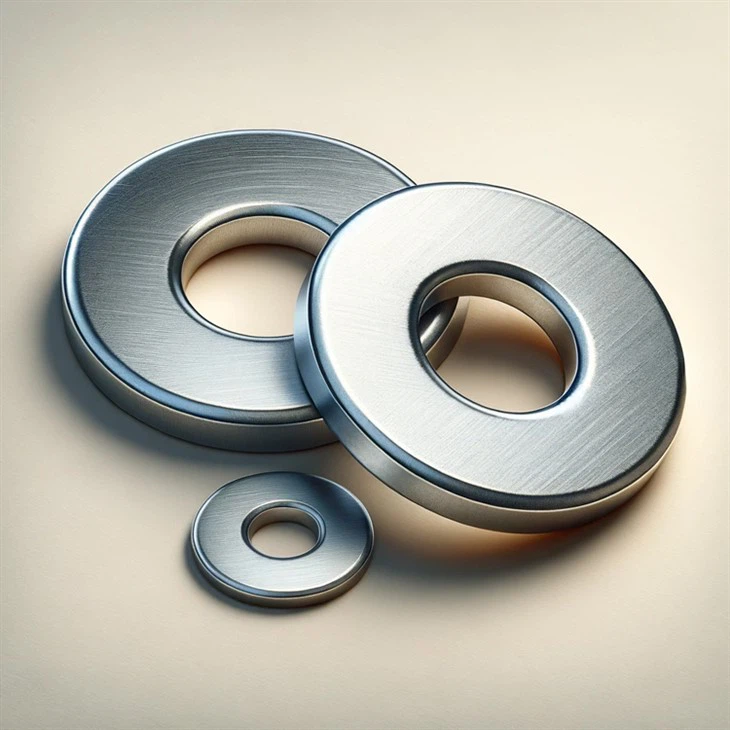
- Type A Plain Washers: These are the most common type of washers and are used in a wide range of applications. They typically have a flat, circular shape with a hole in the center. The dimensional requirements for Type A plain washers include the outer diameter, inner diameter, and thickness, which are specified according to industry standards.
- Regular Helical Spring-Lock Washers: These washers are designed to provide a locking action to prevent nuts and bolts from loosening due to vibration or other forces. They have a helical shape and are made of spring steel. The dimensional requirements for regular helical spring-lock washers include the outer diameter, inner diameter, pitch, and height, which are also specified according to industry standards.
Conclusion
Checking the dimensional accuracy of washers is an important part of ensuring their quality and performance. By using the right tools and following the proper procedures, you can easily check the dimensions of washers and identify any issues before they cause problems in the application. If you're in the market for high-quality washers or have any questions about dimensional accuracy, feel free to reach out for a procurement discussion. I'm always happy to help!
References
- Machinery's Handbook, 31st Edition
- ASME B18.21.1 - Standard for Plain Washers
- ASTM F436 - Standard Specification for Hardened Steel Washers